Quotessence
Home / Quotes / Quote by Dalai Lama

Quote by Dalai Lama

“If we don't understand phenomena, we are more likely to do things to harm ourselves and others.”

Quote by Dalai Lama

Author
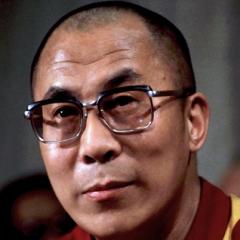
Dalai Lama
Dalai Lama

The Dalai Lama (born July 6, 1935) is the 14th Dalai Lama, a prominent religious leader of Tibetan Buddhism's Gelug school. Born as Tenzin Gyatso in Qinghai Province, China, he is recognized as an incarnation of Avalokiteshvara. He advocates non-violence, peace, and interfaith dialogue, and was awarded the Nobel Peace Prize in 1989. However, his political activities are viewed by the Chinese government as separatist, and he has lived in exile in India since 1959. His influence remains controversial, blending religious authority with political dissent. more

You May Also Like

“We can learn from history how past generations thought and acted, how they responded to the demands of their time and how they solved their problems. We can learn by analogy, not by example, for our circumstances will always be different than theirs were. The main thing history can teach us is that human actions have consequences and that certain choices, once made, cannot be undone. They foreclose the possibility of making other choices and thus they determine future events.”

“One of the deepest and strangest of all human moods is the mood which will suddenly strike us perhaps in a garden at night, or deep in sloping meadows, the feeling that every flower and leaf has just uttered something stupendously direct and important, and that we have by a prodigy of imbecility not heard or understood it. There is a certain poetic value, and that a genuine one, in this sense of having missed the full meaning of things. There is beauty, not only in wisdom, but in this dazed and dramatic ignorance.”

“History is valuable, to begin with, because it is true; and this, though not the whole of its value, is the foundation and condition of all the rest. That all knowledge, as such, is in some degree good, would appear to be at least probable; and the knowledge of every historical fact possesses this element of goodness, even if it posses no other.”

“Abraham Lincoln was, in my judgment, in many respects, the grandest man ever President of the United States. Upon his monument these words should be written: "Here sleeps the only man in the history of the world who, having been clothed with almost absolute power, never abused it, except upon the side of mercy."”