Quotessence
Home / Quotes / Quote by Tim O'Brien

Quote by Tim O'Brien

“That's what fiction is for. It's for getting at the truth when the truth isn't sufficient for the truth.”

Quote by Tim O'Brien

Author
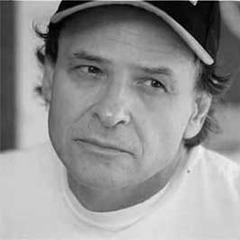
Tim O'Brien
Tim O'Brien

Tim O'Brien is an American novelist born on October 1, 1946. His works, set against the backdrop of the Vietnam War, explore themes of war and memory through personal experiences and fictional narratives. O'Brien's writing style is unique, utilizing nonlinear storytelling and metafictional techniques. more

You May Also Like

“That's the way the mind works: the brain is genetically disposed towards organization, yet if not controlled, will link even the most imagerial fragment to another on the flimsiest pretense and in the most freewheeling manner, as if it takes a kind of organic pleasure in creative association, without regards to logic or chronological sequence.”

“A man's minor actions and arrangements ought to be free, flexible, creative; the things that should be unchangeable are his principles, his ideals. But with us the reverse is true; our views change constantly; but our lunch does not change. Now, I should like men to have strong and rooted conceptions, but as for their lunch, let them have it sometimes in the garden, sometimes in bed, sometimes on the roof, sometimes in the top of a tree. Let them argue from the same first principles, but let them do it in a bed, or a boat, or a balloon.”

“To have Christian hope means to know about evil and yet to go to meet the future with confidence. The core of faith rests upon accepting being loved by God, and therefore to believe is to say Yes, not only to him, but to creation, to creatures, above all, to men, to try to see the image of God in each person and thereby to become a lover. That's not easy, but the basic Yes, the conviction that God has created men, that he stands behind them, that they aren't simply negative, gives love a reference point that enables it to ground hope on the basis of faith.”

“Although the constellations in which I have found myself - and naturally also the periods of life and their different influences - have led to changes and development in the accents of my thought, my basic impulse, precisely during the Council, was always to free up the authentic kernel of the faith from encrustations and to give this kernel strength and dynamism. This impulse is the constant of my life ... what's important to me is that I have never deviated from this constant, which from my childhood has molded my life, and that I have remained true to it as the basic direction of my life.”