Quotessence
Home / Quotes / Quote by Graham Hancock

Quote by Graham Hancock

“We might feel very sure that there is no more to reality that the material world in which we live, but we cannot prove that this is the case. Theoretically there could be other realms, other dimensions, as all religious traditions and quantum physics alike maintain. Theoretically, the brain could be as much a receiver as a generator of consciousness and thus might be fine-tuned in altered states to pick up wavelengths that are normally not accessible to us.”

Quote by Graham Hancock

Work

Supernatural: Meetings with the Ancient Teachers of Mankind

Browse quotes and source details for this work. more

Author
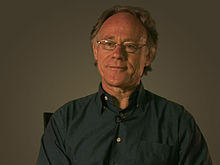
Graham Hancock
Graham Hancock

Graham Hancock is a British writer known for his research into ancient civilizations and mysterious phenomena. His works delve into the mysteries of human history and culture, including ancient Egypt, the Maya, and Atlantis. more

You May Also Like

“Most human characteristics that are genuinely universal are easily accounted for in evolutionary terms, and the arguments are widely known. For example, we all live in families and societies because to do so aids our survival and the propagation of our genes. We all have the capacity for love because it is an emotion that promotes family and social life. We all have laws of one kind or another because these, too, reinforce family and social ties and thus make us stronger and more competitive. We all eat food and drink water because we will soon die if we don't. We all use the unique human gift of language to preserve knowledge handed down from previous generations, and to create culture - thus further sharpening our competitive edge.”

“On the left side of the balcony, at the rear just outside the open doorway through which I'm looking, I suddenly become aware of the presence of a figure. It is an imposing statue, about six feet high and apparently carved in one piece from some green stone - perhaps jade. The sculptor provided excellent detailing of fine robes, and a belt, and something - possibly a sword? - suspended from the belt. At first this stunning piece of sculpture seems just that - a harmless, inanimate statue. I'm curious to see more of it and move my point of view a little closer to get to look at its face. To my surprise, the statue is half animal, half human. It has the body of a powerful and well-muscled man but the head of a crocodile, like Sobek, the ancient Egyptian crocodile god. And now I suddenly realise it is alive - a living being, a supernatural guardian. At this moment its eyes swivel sideways and it is looking at me, taking note of me. The look is intelligent, appraising somehow sly, but yet not threatening. What is this living statue, this being of jade? The vision fades...”

“Quite simple,” said the chairman, “you haven’t really come into contact with our authorities. All those contacts are merely apparent, but in your case, because of your ignorance of the situation here, you think they’re real. As for the telephone: look, in my own house, though I certainly deal often with the authorities, there’s no telephone. At inns and in places like that it may serve a useful purpose, along the lines, say, of an automated phonograph, but that’s all. Have you ever telephoned here, you have? Well then, perhaps you can understand me. At the Castle the telephone seems to work extremely well; I’ve been told the telephones up there are in constant use, which of course greatly speeds up the work. Here on our local telephones we hear that constant telephoning as a murmuring and singing, you must have heard it too. Well, this murmuring and singing is the only true and reliable thing that the local telephones convey to us, everything else is deceptive. There is no separate telephone connection to the Castle and no switchboard to forward our calls; when anyone here calls the Castle, all the telephones in the lowest-level departments ring, or all would ring if the ringing mechanism on nearly all of them were not, and I know this for certain, disconnected. Now and then, though, an overtired official needs some diversion—especially late in the evening or at night—and turns on the ringing mechanism, then we get an answer, though an answer that’s no more than a joke. That’s certainly quite understandable. For who can claim to have the right, simply because of some petty personal concerns, to ring during the most important work, conducted, as always, at a furious pace? Nor can I understand how even a stranger can believe that if he calls Sordini, for instance, it really is Sordini who answers. Quite the contrary, it’s probably a lowly filing clerk from an entirely different department. But it can happen, if only at the most auspicious moment, that someone telephones the lowly filing clerk and Sordini himself answers. Then of course it's best to run from the telephone before hearing a sound.”