Quotessence
Home / Quotes / Quote by Mamoru Oshii

Quote by Mamoru Oshii

“I do feel that there are things you can learn from an artist, but I think you need to be very close to that person, and to know that person fairly well, in order to acquire anything from them. I do have a teacher myself, and I have learned quite a lot from my teacher, but it's not how to make a film. It's more how to approach my life as a director, how to approach and how to lie to a producer.”

Quote by Mamoru Oshii

Author
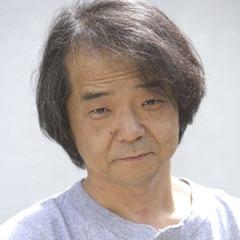
Mamoru Oshii
Mamoru Oshii

Mamoru Oshii is a highly respected Japanese filmmaker, recognized for his work in science fiction and anime. Born on August 8, 1951, he has made a substantial impact on the film industry with his distinctive storytelling and visual style. more

You May Also Like

“I do have huge pressure in terms of making my animation, because a lot of audiences and producers are expecting me to make films with a lot of action. They all know that I'm very good at action scenes, but I tend to not use many, so they're all frustrated with me. But I do that intentionally. Yes, if I do a movie with a bunch of action, it's going to be a lot more successful than the types of movies I'm making right now. The producers often say, "Instead of using all these philosophical phrases, why don't you change this into an action scene?" But I intend to continue to make these movies.”

“Ever since I was a child, I always had insecurity or suspicions about my own personal identity. That's why I started going to a lot of movie theaters, because I felt more comfortable there than at school. Now, the search for a personal identity is becoming a common topic for young Japanese people, and it's a big theme in their own lives. But it's been a theme in my life, as well, ever since I was young.”

“Eventually, I think, by using such elements as flocks of birds or biblical quotes, repeatedly I add meaning to my final product. I'm still exploring how to express my feelings through these elements. I've always felt that in order to portray humans, you should not be shooting humans; you should be shooting something else. And what I've used is animals, which are very important in my films.”

“The religious conflicts of the Reformation era were never simply and only about religion, because religion during this era as in the Middle Ages that preceded it, informed and was meant to inform every domain of life. Violence involving religion and touching other areas of life took many forms: from the Protestant destruction of Catholic religious art and objects in iconoclasm, to Catholic executions of Protestants who refused to renounce their views, to major destructive conflicts such as the French Wars of Religion and the Thirty Years' War.”

“The processes of secularization that followed in the wake of the Reformation continue to work themselves out in complicated ways, not only in Europe but also in North America. To make a very long and complex story short, the success of the Reformation combined with the persistence and renewal of Roman Catholicism in the 16th and 17th centuries made Christianity into an enduring, disruptive problem in new ways, layered on top of problems that already affected late medieval Christianity.”

“The modern Western world is in many ways a sustained attempt to deal with the unintended and unwanted problems related to the disruptive fracturing of Christianity in the 16th and 17th centuries; We can't understand ourselves or our world in 2017 - or its increasingly obvious and grave problems, and just how deeply rooted they are - unless we understand how much they owe to attempts to deal with the problems derived from what started 500 years ago, in 1517.”

“This is my year of transition from what I'm calling the second phase of my life to the third phase of my life. And I wanted to pass it along. What I mean by that is, in the first days of your life you're dependent on others and you learn. You're basically a kid, depending on your parents. In the second phase of your life, you're working and others are dependent on you and you're trying to be successful. And then when you go to the third phase of your life it's no longer as much of a kick to be successful. There's a natural, instinctual desire to help other people be successful.”