Quotessence
Home / Quotes / Quote by Sun Tzu

Quote by Sun Tzu

“For should the enemy strengthen his van, he will weaken his rear; should he strengthen his rear, he will weaken his van; should he strengthen his left, he will weaken his right; should he strengthen his right, he will weaken his left. If he sends reinforcements everywhere, he will everywhere be weak.”

Quote by Sun Tzu

Work

The Art of War

This seminal work explores the principles of warfare, leadership, and conflict resolution, offering timeless insights into the nature of power and the art of winning battles without resorting to brute force. more

Author

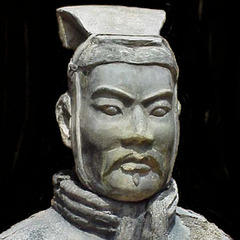
Sun Tzu
Sun Tzu

Sun Tzu, born around 544 BC and died around 496 BC, was a renowned Chinese military strategist. His military thoughts are mainly reflected in his book 'The Art of War', which is considered the classic of military strategy and has had a profound impact on various fields such as military, politics, and economics in later generations. more

You May Also Like

“From the earth, from the air, sustaining forces pour into us--mostly from the earth. To no man does the earth mean so much as to the soldier. When he presses himself down upon her long and powerfully, when he buries his face and his limbs deep in her from the fear of death by shell-fire, then she is his only friend, his brother, his mother; he stifles his terror and his cries in her silence and her security; she shelters him and releases him fro ten seconds to live, to run, ten seconds of life; receives him again and often for ever.”

“We were trained in the army for ten weeks and in this time more profoundly influenced than by ten years at school. We learned that a bright button is weightier than four volumes of Schopenhauer. At first astonished, then embittered, and finally indifferent, we recognised that what matters is not the mind but the boot brush, not intelligence but the system, not freedom but drill. We became soldiers with eagerness and enthusiasm, but they have done everything to knock that out of us. After three weeks it was no longer incomprehensible to us that a braided postman should have more authority over us than had formerly our parents, our teachers, and the whole gamut of culture from Plato to Goethe.”