Quotessence
Home / Quotes / Quote by Ursula Hegi

Quote by Ursula Hegi

“If I look closely, I can almost see myself floating in my mother's palm. Yet, when I shut my eyes, I find a different image of my mother releasing me as we dance in the storm and twirl in separate circles that cause the water to ripple from us in widening rings which merge in one ebbing bracelet of waves where the borders of the quarry meet the water, far from the center where my mother and I continue to spin our bodies in the radiant sheen of lightning.”

Quote by Ursula Hegi

Work

Floating in My Mother's Palm

Browse quotes and source details for this work. more

Author
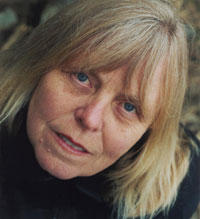
Ursula Hegi
Ursula Hegi

Ursula Hegi is a Swiss writer born on May 23, 1946. Her works are known for their profound character portrayals and rich emotional expressions, particularly for her skill in depicting the fates of women and the social changes around them. more

You May Also Like

“Within this hollow bed of the stream the whole range of the quarry was out of sight, except for where the just visible peak of an escarpment of spoil shelved up to the horizon's mountainous coagulations of floating cottonwool, a density of white cloud perforated here and there by slowly opening and closing loopholes of the palest blue light.”

“From space the little world looked like nothing much - perhaps a pitted and decaying pumpkin, dull orange-black in color, with a handful of tiny orbiting craft floating around it like fruit flies. Here and there amber lights shone out of craters in the surface. What seemed to be scores of deformed silver minnows nibbling the pumpkin rind - together with numbers of smaller noshmates - were actually huge transactinide carriers and lesser starships, either taking on fuel or docked nose-to-ground while their crews rested and recreated inside the not so heavenly body. I have been told that the original Phlegethon of Greek mythology was a fiery river in Hades. Sheltok Concern owned a dozen or so similar way stations with brimstony names - Gehenna, Styx, Sheol, Tophet, Avernus, Niflheim, and the like - that served vessels bound to or fro the terrible R-class worlds where ultraheavy elements are mined.”

“Probably most people who read the Bible think of Sheol as a Jewish kind of Hades, a shadowy place where everyone goes and all are treated the same, a banal and uninteresting netherworld where nothing really happens and people are, in effect, bored for all eternity. But in fact, in most passages of the Bible where Sheol is mentioned, it may well simply be an alternative technical term for the place where an individual is buried—that is, their grave or a pit.”