Quotessence
Home / Quotes / Quote by Mark Epstein

Quote by Mark Epstein

Work

Open to Desire: The Truth About What the Buddha Taught

This work delves into the complex relationship between desire and Buddhist teachings, challenging common assumptions about whether the Buddha advocated for the complete elimination of desire. The book likely examines original Buddhist texts and teachings to present a more nuanced understanding of desire in the Buddhist tradition, perhaps suggesting that certain forms of desire or longing may be integral to the spiritual path rather than obstacles to it. Through careful analysis of ancient teachings, the author invites readers to reconsider the traditional interpretation of desire as something inherently negative in Buddhist philosophy, offering a fresh perspective on what the Buddha truly taught about engaging with desire in daily life and meditation practice. more

Author
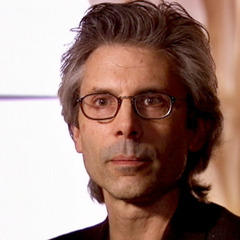
Mark Epstein
Mark Epstein

Mark Epstein is a renowned author born in 1953. His works primarily explore the intersection of Buddhist philosophy and psychology, as well as the application of these ideas in contemporary life. more

You May Also Like

“Yet there were times when he did love her with all the kindness she demanded, and how was she to know what were those times? Alone she raged against his cheerfulness and put herself at the mercy of her own love and longed to be free of it because it made her less than he and dependent on him. But how could she be free of chains she had put upon herself? Her soul was all tempest. The dreams she had once had of her life were dead. She was in prison in the house. And yet who was her jailer except herself?”

“The tragedy in his life already existed. To love an atmospheric spirit. That was the real sorrow. Hopelessness itself. Nowhere on the printed page, nowhere in the annals of man, would her name appear: no local habitation, no name. There are girls like that, he thought, and those you love most, the ones where there is no hope because it has eluded you at the very moment you close your hands around it.”

“You can't make flivers without steel - and you can't make tragedies without social instability. The world's stable now. People are happy; they get what they want, and they never want what they can't get. They're well off; they're safe; they're never ill; they're not afraid of death; they're blissfully ignorant of passion and old age; they're plagued with no mothers or fathers; they've got no wives, or children, or lovers to feel strongly about; they're so conditioned that they pratically can't help behaving as they ought to behave.”

“The evil of the actual disparity in their ages (and Mr. Woodhouse had not married early) was much increased by his constitution and habits; for having been a valetudinarian all his life, without activity of mind or body, he was a much older man in ways than in years; and though everywhere beloved for the friendliness of his heart and his amiable temper, his talents could not have recommended him at any time.”

“Without self-knowledge you have no root in yourselves personally; you may endure for a time, but under affliction or persecution your faith will not last. This is why many in this age (and in every age) become infidels, heretics, schismatics, disloyal despisers of the Church. They cast off the form of truth, because it never has been to them more than a form. They endure not, because they never have tasted that the Lord is gracious; and they never have had experience of His power and love, because they have never known their own weakness and need.”