Quotessence
Home / Quotes / Quote by Mary Wollstonecraft

Quote by Mary Wollstonecraft

Work

Thoughts on the Education of Daughters

Browse quotes and source details for this work. more

Author
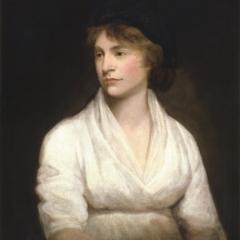
Mary Wollstonecraft
Mary Wollstonecraft

Mary Wollstonecraft, born on April 27, 1759, and died on September 10, 1797, was an influential English writer, philosopher, and feminist. She is best known for her work 'A Vindication of the Rights of Woman', which challenged the gender roles and social structures of her time. more

You May Also Like

“The way I see things, Feyre, you have two options. The first, and the smartest, would be to accept my offer.' I spat at his feet, but he kept pacing, only giving me a disapproving look. 'The second option- and the one only a fool would take- would be for you to refuse my offer and place your life, and thus Tamlin's, in the hands of chance.' He stopped pacing and stared hard at me. Though the world spun and danced in my vision, something primal inside me went still and cold beneath that gaze. 'Let's say I walk out of here. Perhaps Lucien will come to your aid within five minutes of my leaving. Perhaps he'll come in five days. Perhaps he won't come at all. Between you and me, he's been keeping a low profile after his rather embarrassing outburst at your trial. Amarantha's not exactly pleased with him. Tamlin even broke his delightful brooding to beg for him to be spared- such a noble warrior, your High Lord. She listened, of course- but only after she made Tamlin bestow Lucien's punishment. Twenty lashes.' I started shaking, sick all over again to think about what it had to have been like for my High Lord to be the one to punish his friend. Rhysand shrugged, a beautiful, easy gesture. 'So, it's really a question of how much you're willing to trust Lucien- and how much you're willing to risk for it. Already you're wondering if that fever of yours is the first sign of infection. Perhaps they're unconnected, perhaps not. Maybe it's fine. Maybe that worm's mud isn't full of festering filth. And maybe Amarantha will send a healer, and by that time, you'll either be dead, or they'll find your arm so infected that you'll be lucky to keep anything above the elbow.' My stomach tightened into a painful ball. 'I don't need to invade your thoughts to know these things. I already know what you've slowly been realising.' He again crouched in front of me. 'You're dying.' My eyes stung and I sucked my lips into my mouth. 'How much are you willing to risk on the hope that another form of help will come?' I stared at him, sending as much hate as I could into my gaze. He'd been the one who'd caused all this. He'd told Amarantha about Clare, he'd made Tamlin beg. 'Well?' I bared my teeth. 'Go. TO. Hell.' Swift as lightning, he lashed out, grabbing the shard of bone in my arm and twisting. A scream shattered out of me, ravaging my aching throat. The world flashed black and white and red. I thrashed and writhed but he kept his grip, twisting the bone a final time before releasing my arm. Panting, half sobbing as the pain reverberated through my body, I found him smirking at me again. I spat in his face. He only laughed as he stood, wiping his cheek with the dark sleeve of his tunic. 'This is the last time I'll extend my assistance,' he said pausing by the cell door. 'Once I leave this cell, my offer is dead.' I spat again, and he shook his head. 'I bet you'll be spitting on Death's face when she comes to claim you, too.”

“We saw that the period of the Middle Ages was dominated by Scholasticism, that is, the reason which becomes autonomous, reason which is placed above faith. And this reason, as Kireyevsky very well saw, in the nineteenth century when he was criticizing the West from the Orthodox point of view, very quickly turned against Christianity. First it was supposed to be the handmaiden of faith and serve Christianity and prove all the dogmas of faith and prove a great many other things also based upon authority, the authority both of Scripture, of some early Fathers, mostly Augustine, and Aristotle, since it was believed that Aristotle had the true view of nature. But in the age of the Renaissance, this reason turned against religion. Because if it’s [reason is] autonomous, it’s able to develop its own principles; there’s no reason why it should be bound to the religious content. And also we saw in the Middle Ages that the great movements — Francis and Joachim — were very monastically, ascetically oriented. But in the Renaissance, there was a complete reaction against that. And again, this simple matter of the context in which the new ideas arose changed; and therefore no longer were people interested in either monasticism or having reason serve theology. And so we find in this period that the idea of monasticism and asceticism is treated extremely negatively, because the interest in the world has now been awakened.”

“I have always thought that the most sacred duty of men was to give their children an education that would prevent them, when they were older, from regretting their youth, which is the only time when one can truly get an education; you, my dear son, have now arrived at this happy age when the mind begins to think, and when the heart isn't yet subject to those intense emotions that will later come to disturb it.”

“...but in the case of contingent truths, that is, when something can exist in different ways, and none of its determinations are more necessary than others, the need for another principle arises, since that of contradiction vanishes... this principle, on which all contingent truths depend, and which is no less primitive or universal than that of contradiction, is the principle of sufficient reason.”

“Among all books, those of reasoning seem the most susceptible of good translations. Reason and morality belong to all countries. The genius of language, this bane of translators, is less noticeable in books where only ideas have to be conveyed, and where style is not the first merit, whereas works of imagination can be rarely transmitted from one person to another, for, in order to translate a good poet, you would have to be as good a one as he.”