“No matter how convincing and irrefutable I felt my train of thoughts to be, as well as that otherwise ideas that has led us all to the conclusion that life is meaningless I still had some obscure doubts as to the validity of the final outcome of my deliberations. It was expressed as follows: I, that is my reason, have acknowledged that life is a rational. If there is nothing higher than reason (and there is not, and nothing can prove that there is), then reason is the creator of life for me. Without reason I can have no life. How then can reason to deny life when it is the creator of it? Or looking at it another way: if there were no life my reason would not exist, which must mean that reason is the offspring of life. Life is everything. Reason is the fruit of life and yet this reason rejects life itself. I felt that something was not quite right here. Life is a senseless evil, that is certain, I said to myself. Yet I have lived and still live, and so to humanity has lived and still lives. How can this be? Why do men live when it is possible not to live?”
Quote by Leo Tolstoy
Work
A Confession and Other Religious Writings
This book compiles a selection of religious-themed essays and confessional pieces, exploring various spiritual and religious themes. more
Author
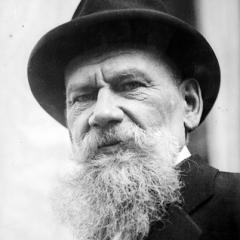
Leo Tolstoy
Leo Tolstoy was a Russian writer and thinker, a prominent representative of 19th-century Russian literature. His works deeply revealed social contradictions and human nature, and had a profound impact on the world. more
You May Also Like
“It’s not the absence of good. It’s being brave enough to oppose the presence of evil.”
Source: The Killing Kind
Source: The Fixer Upper
Source: I Hold a Wolf by the Ears: Stories
Source: Fireproof
“What is evil? Causing others to suffer out of malice.”
Source: Atheism Memes: 40 Reasons Why I'm An Atheist
“Goodness is no weapon against the possessed.”
Source: Beasts and Beauty: Dangerous Tales
Source: Steinbeck: A Life in Letters