Quotessence
Home / Quotes / Quote by William Boyd

Quote by William Boyd

“It is a clear and dazzling summer’s day in Vienna. You are standing in a skewed pentangle of lemony sunshine at the sharp corner of Augustiner Strasse and Augustinerbastei, across from the opera house, indolently watching the world pass by you, waiting for someone or something to catch and hold your attention, to generate a tremor of interest. There’s a curious frisson in the city’s atmosphere today, almost spring-like, though spring is long gone, but you recognize that slight vernal restlessness in the people going by, that stirring of potential in the air, that possibility of audacity – though what audacities they might be, here in Vienna, who can say? Still, your eyes are open, you are unusually poised, ready for anything – any crumb, any flung coin – that the world might casually toss your way.”

Quote by William Boyd

Author
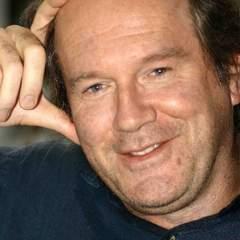
William Boyd
William Boyd

William Boyd is a British novelist known for his unique narrative skills and rich imagination. His works span a variety of genres, including historical novels, spy novels, and adventure novels. Boyd's novels are characterized by complex characters and captivating plots. more

You May Also Like

“Whether the autistic subject is inscribed as 'nearly' developed or 'under' developed, developmental discourses always situate the autistic subject as partially developed and thus not fully human. [...] Developmentalist discourses frame the autistic subject in need of advocacy as a kind of development project, the autistic body becomes understood as 'develop-able.' The autistic is, in other words, framed as one who needs to be taught humanness.”

“[The] excited, angry, upset, or calm choreography of fingers fluttering is simultaneously medicalized and moralized: re-encoded as '[an] odd or repetitive way of moving fingers.' The quiet play of a lone child in a busy playground is now seen as a pathological sign pointing not to personal choice or preference or even to social exclusion but to (medical/moral) deviance.”

“By making an effort to understand people’s actions and beliefs, you may come to realize that your viewpoint is just a drop of all the perspectives. This may help you see through your personal biases and self-centeredness, and you may even strengthen your rapport with others and become people-savvy.”

“It was astonishing to finally realize that my difficulties were part of a larger problem that wasn’t my fault alone, but my brain’s, that there was a scientific modus operandi behind everything I’d come to see as the peculiarities of a besieged personality. It was amazing to comprehend that all the cat-and-mouse games my mind plays, all its endless scheming and compensatory, roundabout thinking, not only owned a name, but was a disability many others also suffered from, in many cases knowingly.”

“As it represents and thus conceives of autism as a threat to the normative individual and social body, contemporary advocacy work issues an effective and powerful 'call to arms' against autism. The orientation of contemporary advocacy is clear: to be a 'good' autism advocate is to be positioned 'against' autism, to 'fight' it, 'combat' it, 'defeat' it, and so on. . . It is this war on autism that I take as my focus for the remainder of this book. I do this so as to interrogate how a militarized autism advocacy is systematically producing and sustaining a social environment that is hostile to autistic difference—an environment that, as we shall see, structures and supports possibilities for violence against those who embody autistic difference.”

“While increasing numbers function to expand out, increasing odds conjure an atmosphere of enclosure and confinement. Growing odds tell an allegorical story of a circle that is closing in zeroing in on the '1,' which is, inevitably your '1.' To borrow the tagline from a 2010 Autism Speaks PSA, 'autism is getting closer to home.”

“Within dominant discourses of autism advocacy, the autistic subjectivity—located simultaneously in the perpetual past (e.g. developmentally 'too slow' and always late) and the future (e.g. yet-to-be developed)—is discursively foreclosed from being (existing) in the privileged and agentive time of the 'now.' Via a kind of time-sensitive investment logic, autism is understood not as a being but as a happening—a costly body, a disruptive threat, a risky trend, and so on—a happening, moreover, that is happening fast.”

“In the ratio, as autism rates are understood to be increasing, the autistic 1 stays the same; it is rather the non-autistic population that seems to be getting smaller. . . The ratio works, in effect, to structure a rivalry or competition—a kind of Foucaultian 'agon' or contest—between constructed oppositions: autism/nonautism, pathology/health, underdevelopment/development, cost/benefit.”