Quotessence
Home / Quotes / Quote by Friedrich Nietzsche

Quote by Friedrich Nietzsche

“Whoever extolleth him as a God of love, doth not think highly enough of love itself. Did not that God want also to be judge? But the loving one loveth irrespective of reward and requital.”

Quote by Friedrich Nietzsche

Author
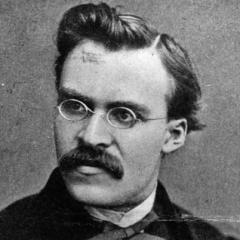
Friedrich Nietzsche
Friedrich Nietzsche

Friedrich Nietzsche was a German philosopher, cultural critic, poet, and writer whose works have had a profound impact on subsequent philosophy, literature, and thought. His ideas revolve around concepts such as the 'will to power', the 'Übermensch', and the 'eternal recurrence'. more

You May Also Like

“Words, our simple words, can be used to hurt or they can be used to heal. They can build up or break down. Our words have power…the power to edify and the power to mortify. Words, the simple words we use every single day can be swords or sanctuaries, bitter herbs or sweet honey. There is no greater influence than our words…ask any child that's been built up or broken by them. In understanding the impact of our words, it’s vital to harness our tongues when we speak and bridle our fingers when we type; for behind the curtain of our words reveal the truth of our hearts. Being mindful that what we say to others often reflects more about ourselves than any mirror in this world.”

“In the world where a million books are being published every year in the United States alone, every book reviewer is my hero! But even more important, every reviewer shapes the culture’s narrative. Reviewers get to decide what’s important. It’s not just the bad reviews — I hated those socks! — the good reviews have as much weight, if not more. Reviewers get to pick what’s the next IT thing! That’s power. …use it wisely…”

“When he would hear me speak in ways that were judgmental or indicated my wish to get rid of some part of me, he would gently say, 'A more respectful word may want to emerge soon' ... He encouraged me to just listen for it, not to try to find it by digging around. Something always came and gradually opened me to a more kind and inclusive way of being with myself and others. I began to notice that my words and perceptions were inextricably linked, so as the words changed and my perceptions were also shifting (and vice versa, I imagine), and this led to more changes in language to better reflect this continually emerging felt-sense experience while encouraging it to deepen further as well--a beautiful circle of transformation. Slowly, slowly I found myself moving away from a more judgmental, analytical, disembodied, left-shifted viewpoint toward a more open, curious, accepting way of being that emerges when right-hemisphere processes take the lead.”