Quotessence
Home / Quotes / Quote by Ronald D. Moore

Quote by Ronald D. Moore

“The creative part, with the writing of it and the vision, and finding the voice of a show and the characters, is much harder to teach somebody. It's like music. You can either play it or you can't. If you can't play music and you really struggle and work hard, you can learn, but you have to have some inner gift to take it to the next level.”

Quote by Ronald D. Moore

Author
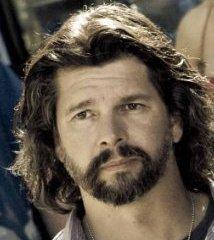
Ronald D. Moore
Ronald D. Moore

Ronald D. Moore (born July 5, 1964) is an American screenwriter and television producer, best known for his work on the Star Trek franchise and for reimagining Battlestar Galactica. He began his career in the late 1980s, contributing to Star Trek: The Next Generation and Star Trek: Deep Space Nine. His reboot of Battlestar Galactica (2004) earned critical acclaim for its gritty realism and complex characters. Moore's work often explores themes of politics, morality, and human nature, making him a significant figure in modern science fiction television. He also created Outlander and For All Mankind. more

You May Also Like

“There are definitely times when the outside eye can shine a light on something you weren't aware of. They're usually exposing a flaw or a problem. Sometimes they're saying, "Hey, this doesn't really work. Have you seen this?" And then, you go, "Oh, I didn't really see that. You're right, that doesn't work." If they're good, they shine a light on issues that you're blind to because you're too close to it.”

“There were a lot of lessons of production to be learned. On the page, the biggest thing you learn on any TV show is how to write to your cast. You write the show at the beginning with certain voices in your head and you have a way that you think the characters will be, and then you have an actor go out there, and you start watching dailies and episodes. Then, you start realizing what they can do and what they can't do, what they're good at and what they're not so good at, how they say things and what fits in their mouth, and you start tailoring the voice of the show to your cast.”

“Now I know that if I'm in a fight or a big argument with executives or the studio or whoever, and it's getting to a point where it's starting to get bad, I don't have to have the fear of, "Am I strong enough to see this through? Would I really make a stand here? Would I really quit over this issue?" And I know in my heart that there is a place where I would walk away. I don't have to make it about my ego. I don't have to make it about whether I'm being strong enough or tough enough.”