“I like to paint something that leads me on and on into the unknown, something that I want to see away on beyond.”
Quote by Grandma Moses
Work
Grandma Moses: An American Original
This work examines the life and artistic career of Anna Mary Robertson Moses, known widely as Grandma Moses, a prominent figure in twentieth-century American folk art. Born in 1860 in upstate New York, Moses spent decades working as a farmwife and mother before taking up painting in her late seventies to relieve arthritis in her hands. Working from memory, she depicted nostalgic scenes of farm life, seasonal landscapes, and community gatherings in a direct, untutored style characterized by flattened perspective, vibrant colors, and meticulous attention to detail. Her paintings gained national attention in the 1940s, leading to widespread exhibitions, commercial reproductions, and cultural celebrity that extended well into her nineties. The book situates her work within the context of American regionalism and the folk art revival, while also addressing how her image as a rustic, elderly painter served particular narratives about American identity and the accessibility of artistic expression. The volume considers her relationship with collectors, dealers, and the media apparatus that promoted her work, as well as her influence on subsequent perceptions of self-taught and outsider art in the United States. more
Author
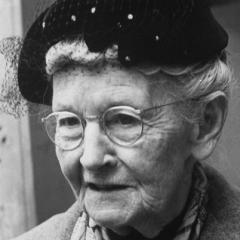
Grandma Moses
Grandma Moses was a renowned American painter, born on September 7, 1860, in New York State, and passed away on December 13, 1961. Her works are known for their unique style and depiction of American rural life. more
You May Also Like
Source: Our Inner Conflicts: A CONSTRUCTIVE THEORY OF NEUROSIS
Source: The Neurotic Personality Of Our Time
Source: The Neurotic Personality Of Our Time
“a normal human being ... does not exist.”
Source: The Neurotic Personality Of Our Time
“There is no such thing as a normal psychology that holds for all people.”
Source: Self-Analysis
“miracles occur in psychoanalysis as seldom as anywhere else.”
Source: The Collected Works of Karen Horney: Self analysis. Neurosis and human growth
Source: Our Inner Conflicts: A CONSTRUCTIVE THEORY OF NEUROSIS