Quotessence
Home / Quotes / Quote by Thomas De Witt Talmage

Quote by Thomas De Witt Talmage

“The Bible is a warm letter of affection from a parent to a child; and yet there are many who see chiefly the severer passages. As there may be fifty or sixty nights of gentle dews in one summer, that will not cause as much remark as one hailstorm of half an hour, so there are those who are more struck by those passages of the Bible that announce the indignation of God than by those that announce His affection.”

Quote by Thomas De Witt Talmage

Book:Sermons

Work

Sermons

This book compiles various sermons, offering insights and teachings on spiritual matters, ethics, and religious beliefs. The sermons are likely to cover a range of topics pertinent to the faith or denomination of the speaker. more

Author

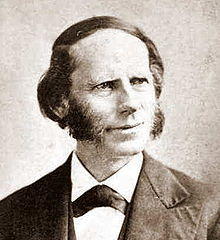
Thomas De Witt Talmage

Thomas De Witt Talmage was an American clergyman, writer, and orator, born on January 7, 1832, and died on April 12, 1902. He was known for his influential sermons and writings in the fields of religion and morality during the late 19th and early 20th centuries. more

You May Also Like

“Destiny ... a word which means more than we can find any definitions for. It is a word which can have no meaning in a mechanical universe: if that which is wound up must run down, what destiny is there in that? Destiny is not necessitarianism, and it is not caprice: it is something essentially meaningful. Each man has his destiny, though some men are undoubtedly "men of destiny" in a sense in which most men are not.”

“One thing you cannot know: The sudden extinction of every alternative, The unexpected crash of the iron cataract. You do not know what hope is, until you have lost it. You only know what it is not to hope: You do not know what it is to have hope taken from you Or to fling it away, to join the legion of the hopeless Unrecognized by other men, though sometimes by each other.”

“As a rule, with me an unfinished [idea] is a thing that might as well be rubbed out. It's better, if there's something good in it that I might make use of elsewhere, to leave it at the back of my mind than on paper in a drawer. If I leave it in a drawer it remains the same thing but if it's in the memory it becomes transformed into something else.”