Quotessence
Home / Quotes / Quote by Oscar Wilde

Quote by Oscar Wilde

Work

The Artist as Critic: Critical Writings of Oscar Wilde

This book compiles a selection of Oscar Wilde's critical writings, offering a glimpse into his perspectives on various artistic and cultural topics. It includes his essays and reviews, providing a comprehensive view of Wilde's intellectual contributions to the discourse on art. more

Author
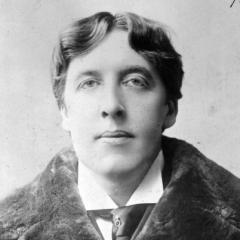
Oscar Wilde
Oscar Wilde

Oscar Wilde, born on October 16, 1854, in Ireland, and died on November 30, 1900, was a renowned Irish writer, playwright, and poet. His works are known for their wit, satire, and unique style, with notable works including 'The Picture of Dorian Gray' and 'Lady Windermere's Fan'. more

You May Also Like

“An entirely new factor has appeared in the social development of the country, and this factor is the Irish-American, and his influence. To mature its powers, to concentrate its action, to learn the secret of its own strength and of England's weakness, the Celtic intellect has had to cross the Atlantic. At home it had but learned the pathetic weakness of nationality; in a strange land it realised what indomitable forces nationality possesses. What captivity was to the Jews, exile has been to the Irish: America and American influence have educated them.”

“The real weakness of England lies, not in incomplete armaments or unfortified coasts, not in the poverty that creeps through sunless lanes, or the drunkenness that brawls in loathsome courts, but simply in the fact that her ideals are emotional and not intellectual.”

“We become lovers when we see Romeo and Juliet, and Hamlet makes us students. The blood of Duncan is upon our hands, with Timon werage against the world, and when Lear wanders out upon the heath the terror of madness touches us. Ours is the white sinlessness of Desdemona, and ours, also, the sin of Iago.”

“In his very rejection of art Walt Whitman is an artist. He tried to produce a certain effect by certain means and he succeeded....He stands apart, and the chief value of his work is in its prophecy, not in its performance. He has begun a prelude to larger themes. He is the herald to a new era. As a man he is the precursor of a fresh type. He is a factor in the heroic and spiritual evolution of the human being. If Poetry has passed him by, Philosophy will take note of him.”