Quotessence
Home / Quotes / Quote by David Berlinski

Quote by David Berlinski

“Leibniz endeavored to provide an account of inference and judgment involving the mechanical play of symbols and very little else. The checklists that result are the first of humanity's intellectual artifacts. They express, they explain, and so they ratify a power of the mind. And, of course, they are artifacts in the process of becoming algorithms.”

Quote by David Berlinski

Work

The Advent of the Algorithm: The Idea that Rules the World

This book delves into the history and significance of algorithms, examining their role in shaping modern life and the profound influence they have on various aspects of society. more

Author
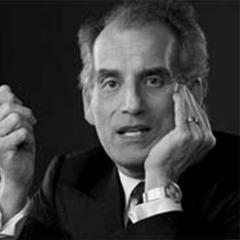
David Berlinski
David Berlinski

David Berlinski is an American educator renowned for his contributions to mathematics and philosophy. Born in 1942, he graduated from Columbia University with a Ph.D. in mathematics. Berlinski is praised for his clear and insightful writing style, with his works spanning a wide range of topics from scientific philosophy to cultural commentary. more

You May Also Like

“When I ask people to contemplate selflessness, the sometimes react as if I've asked them to put their house on the market or give away all their money. If there was a self that existed in the way we think, discovering selflessness would be like putting our house on the market. But in the Buddhist tradition, the discovery of selflessness is called "completely joyful." It's not called "the raw end of the deal," or "I'd rather go back to bed," or "This is scary and depressing."”

“Self-reflection is the gateway to freedom. It also brings greater appreciation and enjoyment. We begin to enjoy spending time with our own mind, and we enjoy reflecting on our experience of the teachings. Like the sun emerging from behind the clouds, the teachings of the dharma become clear.”

“This whole electric universe is a complex maze of similar tensions. Every particle of matter in the universe is separated from its condition of oneness, just as the return ball is separated from the hand, and each is connected with the other one by an electric thread of light which measures the tension of that separateness.”

“... Grief is selfish. It is indulged in for self-gratification, not for love. Cosmic man knows the beauty and unreality of death. Sympathy for the afflicted makes a reality of the affliction by its recognition as an infliction, while sorrow for the loss of anything, or for the »unfortunate« condition of anybody, is forgetful of the beauty and abundance of all-giving God and Nature. The Mind of God knows but one unchanging emotion - ECSTASY - the ecstasy of Love - the ecstasy which has its beginnings in an inner joyousness of one who is far on the road to the discovery of his immortal Self.”

“And the fear of not being is born in that space. But in meditation, when this is understood, the mind can enter into a dimension of space where action is inaction. We do not know what love is, for in the space made by thought around itself as the me, love is the conflict of the me and the not-me. This conflict, this torture, is not love. Thought is the very denial of love, and it cannot enter into that space where the me is not. In that space is the benediction which man seeks and cannot find. He seeks it within the frontiers of thought, and thought destroys the ecstasy of this benediction.”