“You want to raise your child in such a way that you don't have to control him, so that he will be in full possession of himself at all times. Upon that depends his good behavior, his health, his sanity.”
Quote by L. Ron Hubbard
Work
Scientology, a New Slant on Life
This book outlines fundamental concepts regarding the nature of life, the spirit, and human experience as understood within Scientology. It presents viewpoints on achieving improved conditions and understanding through applying its principles. The work serves as an introductory text to the philosophical system developed by L. Ron Hubbard and has been distributed within Scientology organizations since its publication. more
Author
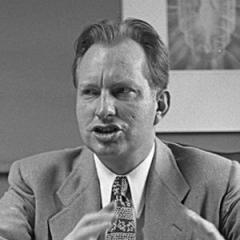
L. Ron Hubbard
L. Ron Hubbard, born on March 13, 1911, was an American author known for his contributions to the science fiction genre. His works spanned a variety of types, including science fiction, fantasy, and adventure, with his most notable achievement being the creation of a series of science fiction novels. Hubbard passed away on January 24, 1986. more
You May Also Like
Source: Love in Action: Writings on Nonviolent Social Change
Source: Small Wonder
Source: Hyperspace: A Scientific Odyssey through Parallel Universes, Time Warps, and the Tenth Dimension
“Society became my glittering bride, And airy hopes my children.”
Source: Songs of Innocence and of Experience