Quotessence
Home / Quotes / Quote by Carl Gustav Carus

Quote by Carl Gustav Carus

Author

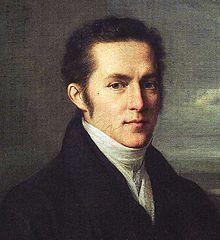
Carl Gustav Carus
Carl Gustav Carus

Carl Gustav Carus, born on January 3, 1789, and died on July 26, 1869, was a prominent German psychologist whose work significantly contributed to the development of psychology. more

You May Also Like

“I think that in order to achieve progress in the study of language and human cognitive faculties in general it is necessary first to establish 'psychic distance' from the 'mental facts' to which Köhler referred, and then to explore the possibilities for developing explanatory theories... We must recognize that even the most familiar phenomena require explanation and that we have no privileged access to the underlying mechanisms, no more so than in physiology or physics.”

“If we wish to imitate the physical sciences, we must not imitate them in their contemporary, most developed form; we must imitate them in their historical youth, when their state of development was comparable to our own at the present time. Otherwise we should behave like boys who try to copy the imposing manners of full-grown men without understanding their raison d' être, also without seeing that in development one cannot jump over intermediate and preliminary phases.”

“In the course of normal speaking the inhibitory function of the will is continuously directed to bringing the course of ideas and the articulatory movements into harmony with each other. If the expressive movement which which follows the idea is retarded through mechanical causes, as is the case in writing ... such anticipations make their appearance with particular ease.”

“Many psychologists ... thought by turning their attention to their own consciousness to be able to explain what happened when we were thnking. Or they sought to attain the same end by asking another person a question, by means of which certain processes of thought would be excited, and then by questioning the person about the introspection he had made. It is obvious ... that nothing can be discovered in such experiments.”