Quotessence
Home / Quotes / Quote by Aberjhani

Quote by Aberjhani

“It’s not just a matter of having lost the land and the wealth that came with it. It’s a matter of the fact that we lost a way of life that we should have been able to pass on to our children and to their children, but which we can’t because of what was taken from us. (Harris Neck, Georgia native Wilson Moran as quoted by Aberjhani in The American Poet Who Went Home Again)”

Quote by Aberjhani

Work

The American Poet Who Went Home Again

This book delves into the emotional and psychological transformation of a poet as he revisits his roots, intertwining his personal history with the evolution of his artistic identity. more

Author
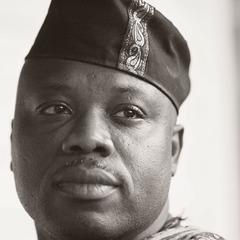
Aberjhani
Aberjhani

Aberjhani, born on July 8, 1957, is an accomplished columnist whose work spans a wide range of topics including culture, history, and literature. Renowned for his profound insights and unique writing style, Aberjhani's articles often provoke deep thought among readers. more

You May Also Like

“[From 1994 introduction by Dr. Klaus Müller.] The postwar German government did not simply forget about homosexuals; on the contrary, it actively continued to persecute them, and to justify the efforts of the Nazis in this respect… The Nazi version of Paragraph 175 was, in fact, explicitly upheld in 1957 by the West German supreme court.”

“And so we must imagine a new country. Reparations—by which I mean the full acceptance of our collective biography and its consequences—is the price we must pay to see ourselves squarely. The recovering alcoholic may well have to live with his illness for the rest of his life. But at least he is not living a drunken lie. Reparations beckon us to reject the intoxication of hubris and see America as it is—the work of fallible humans. Won’t reparations divide us? Not any more than we are already divided. The wealth gap merely puts a number on something we feel but cannot say—that American prosperity was ill gotten and selective in its distribution. What is needed is an airing of family secrets, a settling with old ghosts. What is needed is a healing of the American psyche and the banishment of white guilt. What I’m talking about is more than recompense for past injustices—more than a handout, a payoff, hush money, or a reluctant bribe. What I’m talking about is a national reckoning that would lead to spiritual renewal. Reparations would mean the end of scarfing hot dogs on the Fourth of July while denying the facts of our heritage. Reparations would mean the end of yelling “patriotism” while waving a Confederate flag. Reparations would mean a revolution of the American consciousness, a reconciling of our self-image as the great democratizer with the facts of our history”

“There are pragmatic as well as moral grounds for the United States to follow Germany's lead [in dealing with it's past human rights crimes]. American media may have largely ignored the reasons we decided to destroy Hiroshima or oust the democratically elected governments in Iran or the Congo. Other nations' media has not. Few Americans are quite aware of how little credibility we retain in other parts of the world.”