Quotessence
Home / Quotes / Quote by John Connolly

Quote by John Connolly

“There are some truths so terrible that they should not be spoken aloud, so appaling that even to acknowledge them is to risk sacrificing a crucial part of one's humanity, to exist in a colder, crueler world than before. The Burning Soul”

Quote by John Connolly

Author
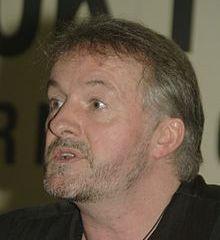
John Connolly
John Connolly

John Connolly, born on May 31, 1968, is an Irish author known for his crime and mystery novels. His works are highly appreciated by readers for their unique style and engaging plots. more

You May Also Like

“It was my first glimpse of the honeycomb world, my first inkling that the past never truly dies but is strangely, beautifully alive in the present. There is an interconnectedness to all things, a link between what lies buried and what lives above, a capacity for mutability that allows a good act committed in the present to rectify an imbalance in times gone by. That, in the end, is the nature of justice: not to undo the past but, by acting further down the line of time, to restore some measure of harmony, some possibility of equilibrium, so that lives may continue with their burden eased and the dead may find peace in a world beyond this one.”

“Ignore those who resent you. Avoid those who begrudge you. Excuse those who envy you. Pity those who hate you.”

“Yet neither they nor the condition of academic philosophy more generally is sufficient to explain the radical marginalization of philosophical concerns in our culture. This marginalization has several aspects. In part it is a matter of the relegation of philosophy in the vast majority of colleges and universities to a subordinate position in the curriculum, an inessential elective for those who happen to like that sort of thing. But this itself is a symptom of a more general malaise. For to a remarkable extent the norms of our secularized culture not only exclude any serious and systematic questioning of oneself and others about the nature of the human good and the order of things, but they also exclude questioning those dominant cultural norms that make it so difficult to pose these philosophical questions outside academic contexts in any serious and systematic way. We have within our social order few, if any milieus within which reflective and critical enquiry concerning the central issues of human life can be sustained and the education to which we subject our young is not well-designed to develop the habits of thought necessary for such questioning. This tends to be a culture of answers, not of questions, and those answers, whether secular or religious, liberal or conservative, are generally delivered as though meant to put an end to questioning. So it is not just that the philosophy of the academic philosopher has been marginalized in the college curriculum. It is also and more importantly that, when plain persons do try to ask those questions about the human good and the nature of things in which the philosophical enterprise is rooted, the culture immediately invites them to think about something else and to forget those questions.”

“Nhân loại rất sợ cái gì mập mờ. Mỗi khi không kiếm ra được nguyên nhân của một hiện tượng nào đó, chúng ta thường hay lo sợ đau khổ. Một lí do, dù sai đi nữa cũng còn hơn là không có lí do. Đây, một trường hợp rất bình thường: nửa đêm bạn thức dậy, thấy đau bao tử. Bạn tìm nguyên nhân, nhớ lại xem ban ngày đã ăn những gì: "À! tại trái dưa đó rồi!" Nguyên nhân có thể phức tạp hơn nhiều: do các thức ăn cũng có, do thần kinh cũng có, do tranh biện khá hăng trong bữa cơm, lo lắng vì có tin sở sắp đuổi bớt nhân viên ... Nhưng đổ tội riết cho trái dưa vẫn là dễ hơn.”

“... lòng người ai cũng như ai, thấy đời sống hiện tại có chỗ bất mãn, nên phải níu vào thời xưa để tìm nguồn an ủi, để có lí lẽ mà phàn nàn: "Ngày xưa các cụ sung sướng như vậy đó, còn chúng ta bây giờ ... " Tôi không bảo rằng chúng ta phải hoàn toàn thỏa mãn về hiện tại - như vậy làm sao mà tiến được - nhưng bất mãn mà tìm cách cải thiện cho đời sống thì nên, chứ bất mãn để tiếc một thời đã qua thì sẽ mắc hai cái lỗi: một là yên phận, hai là không sáng suốt, tin những điều vô căn cứ. ... Thời nào mà chẳng là hoàng kim nếu đứng xa mà nhìn?”

“Lí luận là phán đoán. Muốn phán đoán cho đúng,lí luận phải đúng. Dù là diễn dịch hay qui nạp ta cũng phải căn cứ vào sự thực (một sự lí đúng hoặc những sự kiện đúng). Muốn biết sự thực, ta cần phải học hỏi, nghĩa là phải nhận xét và điều tra: nhận xét những việc xảy ra trước mắt ta, điều tra những việc xảy ra ở xa ta về thời gian, hoặc không gian.”