Quotessence
Home / Quotes / Quote by Robert Harris

Quote by Robert Harris

Work

Archangel

Archangel is a speculative fiction novel that explores themes of faith, power, and the struggle for survival in a world reshaped by divine intervention. The story follows the journey of a protagonist who encounters an archangel, leading to a series of events that challenge the very fabric of society. more
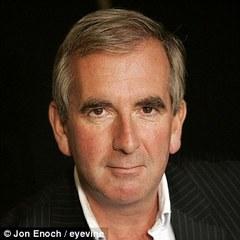
Author

Robert Harris
Robert Harris

Robert Harris is a renowned British novelist, born on March 7, 1957. He is known for his historical novels and thrillers, which have gained popularity among readers. more

You May Also Like

“Time. Now here is a peculiar commodity, boy. The measurement of time. Best accomplished, obviously, with a watch. But, lacking a watch, a man may use instead the ebb and flow of light and dark. Lacking, however, a window through which to see such movement, the reliance must be devolved upon some inner mechanism of the mind. But if the mind has received a shock, the mechanism is disturbed, and time becomes as the ground is to a drunkard, variable.”

“He wondered what O'Brian would have been like in a real war, one in which he actually had to fight rather than just take pictures. Then he wondered what he would have been like. Most of the men he knew asked themselves that question, as if never having fought somehow made them incomplete - left a hole in their lives where a war should have been. Was it possible that this absence of war - marvellous though it was and so forth: that went without saying - was it possible that it had actually trivialised people? Because everything was so bloody trivial now, wasn't it? This was The Trivial Age. Politics was trivial. What people worried about was trivial - mortgages and pensions and the dangers of passive smoking. Jesus! - is this what we've been reduced to, worrying about passive smoking, when our parents and our grandparents had to worry about being shot or bombed? And then he began to feel guilty, because what was he implying here? That he wanted a war? ... He was glad it was over, of course, in a way - but at least while it was on people like him had known where they stood, could point to something and say: well, we may not know what we do believe in, but we don't believe in that.”