Quotessence
Home / Quotes / Quote by Syed Muhammad Naquib al-Attas

Quote by Syed Muhammad Naquib al-Attas

“The secularizing 'values' and events that have been predicted would happen in the Muslim world have now begun to unfold with increasing momentum and persistence due still to the Muslims' lack of understanding of the true nature and implications of secularization as a philosophical program.”

Quote by Syed Muhammad Naquib al-Attas

Work

Islam and Secularism

Browse quotes and source details for this work. more

Author

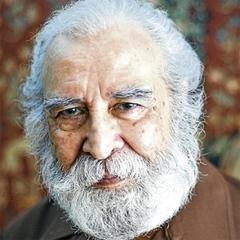
Syed Muhammad Naquib al-Attas

Syed Muhammad Naquib al-Attas, born on September 5, 1931, is a prominent Islamic philosopher, author, and scholar from Malaysia. His works cover a wide range of fields, including Islamic philosophy, religious thought, and cultural studies, and have had a profound impact on scholars worldwide. more

You May Also Like

“In the West, the great problem that was created for Christianity from the 17th century onward and even earlier during the Renaissance was that religion began to retreat from one domain after another in order to accommodate the forces of modernism and secularism. One can point to the Galileo trial, after which the Church ‘‘lost the cosmos.’’ In fact, the Church was right in many ways, because what Galileo was saying did not concern astronomy alone, but also theology, which was quite something else. As a consequence of this trial, the Church withdrew from its concern with the sciences of nature and no longer challenged what kind of science was developed, and suf- fered the results of accepting the reductionism and materialistic views of modern science. This process resulted in the complete secularization of nature and the cosmos.”

“Evolution,' proclaimed the Rev. Daniel Miner Gordon during his inaugural lecture at Presbyterian College in Halifax, 'with its concept of growth rather than mechanism, of life working from within rather than a power constructing from without, helps further illustrate the method of Him who is the life of all that lives.' Seen in this way, evolution gave evidence of God's existence and watchful Providence; it revealed that the Creator was omniscient and omnipresent. Christian evolution implied a God of immanence, a God who dwelled within and constantly guided the natural world. This contrasted sharply with the orthodox view of a transcendent God who ruled the world from afar and touched it only by the occasional intervention in nature or history - a miracle. It now seemed that God was within nature and history, and close to humankind. Moreover, God the harsh judge had been banished by scientific understanding. It was understood that God was an active benevolent spirit. Some of the mystery had been lifted. Evolution had cast new light upon nature, the destiny of humanity, and the ways of God. It seemed to have provided a more inspiring and certain Christian world-view. Ironically, the clergy could base their arguments regarding the existence and nature of God on science, the source of so much doubt regarding the truth of Christianity.”

“Although the charismatic movement that influenced Protestant churches in the 1970s is often seen as a conservative reaction to liberalizing trends, the reality is rather different. Although the new emphasis in charismatic fellowships on 'gifts of the Holy Spirit' as speaking in tongues, healing, and prophesying might seem like a significant injection of supernaturalism, it eroded the doctrinal orthodoxy of conservative Protestant sects and weakened the behavioral codes that had served to distinguish conservative Protestants from the wider population. The new churches recruited primarily from older denominations and sects rather from the unchurched, and much of their appeal lay in the way they disguised the extent of change with some old language. Far from being a cure for the liberalization of the faith, they made the change easier by providing easy steps away from the old orthodoxies.”

“...E nós sabemos Deus. E o que precisamos Dele, extraímos. (Não sei o que chamo de Deus, mas assim pode ser chamado.) Se só sabemos muito pouco de Deus, é porque precisamos pouco: só temos Dele o que fatalmente nos basta, só temos de Deus o que cabe em nós. (A nostalgia não é do Deus que nos falta, é a nostalgia de nós mesmos que não somos bastante; sentimos falta de nossa grandeza impossível - minha atualidade inalcançável é o meu paraíso perdido.)”