Quotessence
Home / Quotes / Quote by Sun Tzu

Quote by Sun Tzu

“Secret operations are essential in war; upon them the army relies to make its every move. An army without secret agents is exactly like a man without eyes or ears.”

Quote by Sun Tzu

Work

The Art of War

This seminal work explores the principles of warfare, leadership, and conflict resolution, offering timeless insights into the nature of power and the art of winning battles without resorting to brute force. more
Author

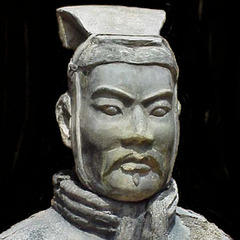
Sun Tzu
Sun Tzu

Sun Tzu, born around 544 BC and died around 496 BC, was a renowned Chinese military strategist. His military thoughts are mainly reflected in his book 'The Art of War', which is considered the classic of military strategy and has had a profound impact on various fields such as military, politics, and economics in later generations. more

You May Also Like

“Throw the troops into a position from which there is no escape and even when faced with death they will not flee. For if prepared to die, what can they not achieve? Then officers and men together put forth their utmost efforts. In a desperate situation they fear nothing; when there is no way out they stand firm. Deep in a hostile land they are bound together, and there, where there is no alternative, they will engage the enemy in hand to hand combat.”

“It is a cliché, and a bad one, that generals try to “fight the last war” – that is, do what worked the last time out. That does not give them enough credit. Rather they tend to fight the war they would like to fight or the one they expected to fight. But neither of those responses is usually sufficient. The foremost task of a general is to understand the nature of the war he or she faces – which often turns out to be a third way, neither the one preferred nor the one expected.”

“There are five qualities which are dangerous in the character of a general: If reckless, he can be killed. A general who is stupid and courageous is a calamity. As far as a general is concerned, courage is but one quality. If cowardly, captured. One who esteems life above all will be overcome with hesitance. Hesitance in a general is a great calamity. If quick-tempered you can make a fool of him. An impulsive man can be provoked to rage and brought to his death. One easily angered is irascible, obstinate and hasty. He does not consider difficulties. If he has too delicate a sense of honor you can calumniate him. One anxious to defend his reputation pays no regard to anything else. If he is of a compassionate nature you can harass him. He who is humanitarian and compassionate and fears only casualties cannot give up temporary advantage for a long-term gain and is unable to let go this in order to seize that. Now these five traits of character are serious faults in a general and in military operations are calamitous. The ruin of the army and the death of the general are inevitable results of these shortcomings. They must be deeply pondered.”

“It is the business of a general to be serene and inscrutable, impartial and self-controlled. If serene he is not vexed; if inscrutable, unfathomable; if upright, not improper; if self-controlled, not confused. He should be capable of keeping his officers and men in ignorance of his plans. His troops may join him in rejoicing at the accomplishment, but they cannot join him in laying the plans. He prohibits superstitious practices and so rids the army of doubts. Then until the moment of death there can be no troubles. He changes his methods and alters his plans so that people have no knowledge of what he is doing. Courses of action previously followed and old plans previously executed must be altered. He alters his campsites and marches by devious routes, and thus makes it impossible for others to anticipate his purpose. To assemble the army and throw it into a desperate position is the business of the general. He leads the army deep into hostile territory and there releases the trigger. He burns his boats and smashes his cooking pots; he urges the army on as if driving a flock of sheep, now in one direction, now in another, and none knows where he is going. He fixes a date for rendezvous and after the troops have met, cuts off their return route just as if he were removing a ladder from beneath them.”