Quotessence
Home / Quotes / Quote by Buster Keaton

Quote by Buster Keaton

“It was not always possible to take that war seriously. In the first place I could not understand why we, the French, and the English were fighting the Germans and the Austrians. Being in vaudeville all of my life had made me international-minded. I had met too many kindly German performers—singers and acrobats and musicians—to believe they could be as evil as they were being portrayed in our newspapers. Having known Germans, Japanese jugglers, Chinese magicians, Italian tenors, Swiss yodelers and bell-ringers, Irish, Jewish, and Dutch comedians, British dancers, and whirling dervishes from India, I believed people from everywhere in the world were about the same. Not as individuals, of course, but taken as a group.”

Quote by Buster Keaton

Work

My Wonderful World Of Slapstick

This book compiles a series of humorous tales that showcase slapstick comedy, featuring exaggerated physical comedy and slapstick situations. more

Author
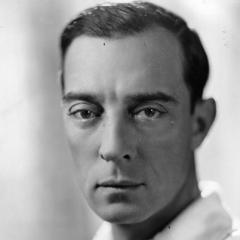
Buster Keaton
Buster Keaton

Buster Keaton, born Joseph Frank Keaton, was an American actor, director, screenwriter, and producer. Known for his unique comedic style and exceptional performance skills, he is considered one of the greatest comedians in the history of film. Keaton's career began in the silent film era, and he gained fame with his short comedy series featuring Samuel M. Jackson. 'One Week' is his breakthrough film, and he later became an independent filmmaker, directing, writing, and starring in a series of classic works. more

You May Also Like

“[Discussing a visit with Vietnamese peasants] I found them to be frightened, muddled, weary. Again and again as they spoke, one thread seemed to run through their conversation. They were not participants in the conflict, but its victims. They sympathized with neither Diem or the Vietcong, only leaning to the side that harrassed them less.”

“That time will have come when our prison, which though extensive is nonetheless cramped and filled with suffocatingly stale air, has opened-that is, when the war raging at present has come to an end, one way or the other. And how that "or the other" sets me in terror of both myself and the awful straits into which fate has squeezed the German heart! For in fact I have only "the other" in mind; I am relying on it, counting solely on it, against my conscience as a citizen. After all, never-failing public indoctrination has made sure that we are profoundly aware of the crushing consequences, in all their irrevocable horror, of a German defeat, so that we cannot help fearing it more than anything else in the world. And yet there is something that some of us fear-at certain moments that seem criminal even to ourselves, whereas others fear it quite frankly and permanently-fear more than a German defeat, and that is a German victory. I hardly dare ask myself to which of these two persuasions I belong. Perhaps to a third, in which one yearns for defeat constantly and consciously, but with unrelenting agony of conscience.”

“Some People Some people flee some other people. In some country under a sun and some clouds. They abandon something close to all they’ve got, sown fields, some chickens, dogs, mirrors in which fire now preens. Their shoulders bear pitchers and bundles. The emptier they get, the heavier they grow. What happens quietly: someone’s dropping from exhaustion. What happens loudly: someone’s bread is ripped away, someone tries to shake a limp child back to life. Always another wrong road ahead of them, always another wrong bridge across an oddly reddish river. Around them, some gunshots, now nearer, now farther away, above them a plane seems to circle. Some invisibility would come in handy, some grayish stoniness, or, better yet, some nonexistence for a shorter or a longer while. Something else will happen, only where and what. Someone will come at them, only when and who, in how many shapes, with what intentions. If he has a choice, maybe he won’t be the enemy and will leave them to some sort of life.”

“But the further you are away from it, the more war reads like arithmetic, and past that it reads like fiction, past that it’s just an annoying video on your info stream. How could they possibly imagine the anguish on the faces of the dead? How could the mob in the street demanding handouts ever know on a sensory level that when a human rots, it isn’t just the skin that stinks, but the intestines, the stomach, the liver?”

“A smaller but still significant risk of taking the neoliberal pill is you get more misguided adventures like the wars in Afghanistan and Iraq. Indeed, there’s no way that elites could get us into another Iraq today. This at first glance appears to be a good thing, but it’s been at the cost of our culture becoming more neurotic, cynical, parochial, and fearful. Americans wouldn’t go off and die by the thousands in Iraq today because they don’t think anything is worth fighting for or believing in. Young people aren’t even leaving the house. I’d rather be a country that occasionally fights stupid wars than one that shuts itself off from the rest of the world and gives up on any idealistic vision of the future.”