“A good government implies two things: first, fidelity to the object of government, which is the happiness of the people; secondly, a knowledge of the means by which that object can be best attained.”
Quote by James Madison
Work
The Essential Federalist: A New Reading of the Federalist Papers
This book delves into The Federalist Papers, providing a contemporary analysis of the original texts that shaped the United States Constitution. It examines the arguments and debates surrounding the creation of the federal government, offering readers a deeper understanding of the principles and values upon which the nation was built. more
Author
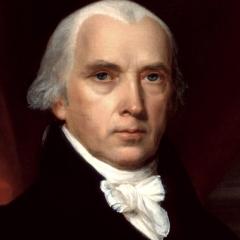
James Madison
James Madison, the 4th President of the United States, was born on March 16, 1751, and died on June 28, 1836. He was a key figure in drafting the U.S. Constitution and had a profound impact on the political system of the United States. more
You May Also Like
Source: The Works of Alexander Hamilton: Miscellanies, 1774-1789: A full vindication; The farmer refuted; Quebec bill; Resolutions in Congress; Letters from Phocion; New-York Legislature, etc
Source: Commentaries on the Constitution of the United States: With a Preliminary Review of the Constitutional History of the Colonies and States, Before the Adoption of the Constitution
Source: The Federalist
Source: The planting of colonies in New England
Source: The Works of Alexander Hamilton: Miscellanies, 1774-1789: A full vindication; The farmer refuted; Quebec bill; Resolutions in Congress; Letters from Phocion; New-York Legislature, etc
Source: Commentaries on the Constitution of the United States: With a Preliminary Review of the Constitutional History of the Colonies and States, Before the Adoption of the Constitution