Quotessence
Home / Quotes / Quote by Thucydides

Quote by Thucydides

“In practice we always base our preparations against an enemy on the assumption that his plans are good; indeed, it is right to rest our hopes not on a belief in his blunders, but on the soundness of our provisions. Nor ought we to believe that there is much difference between man and man, but to think that the superiority lies with him who is reared in the severest school.”

Quote by Thucydides

Work

The Landmark Thucydides

The Landmark Thucydides is a scholarly annotated edition of the ancient Greek historian Thucydides' narrative of the Peloponnesian War between Athens and Sparta. This edition includes extensive commentary and analysis, providing readers with a deeper understanding of Thucydides' historical methods and the political and military events of the time. more

Author
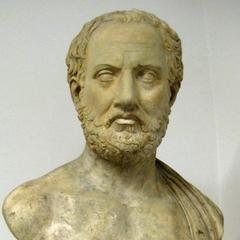
Thucydides
Thucydides

Thucydides, a renowned Greek historian, lived from 460 BC to 395 BC. His work, 'The History of the Peloponnesian War', is considered a classic in Western historical writing, known for its meticulous record of facts and profound political analysis. more

You May Also Like

“Some legislators only wish to vengeance against a particular enemy. Others only look out for themselves. They devote very little time on the consideration of any public issue. They think that no harm will come from their neglect. They act as if it is always the business of somebody else to look after this or that. When this selfish notion is entertained by all, the commonwealth slowly begins to decay.”

“In general, the men of lower intelligence won out. Afraid of their own shortcomings and of the intelligence of their opponents, so that they would not lose out in reasoned argument or be taken by surprise by their quick-witted opponents, they boldly moved into action. Their enemies,on the contrary, contemptuous and confident in their ability to anticipate, thought there was no need to take by action what they could win by their brains.”

“The absence of romance from my history will, I fear, detract somewhat from its interest; but if it be judged useful by those inquirers who desire an exact knowledge of the past as an aid to the interpretation of the future, which in the course of human things must resemble if it does not reflect it, I shall be content. In fine, I have written my work, not as an essay which is to win the applause of the moment, but as a possession for all time.”

“In peace and prosperity states and individuals have better sentiments, because they do not find themselves suddenly confronted with imperious necessities; but war takes away the easy supply of daily wants and so proves a rough master that brings most men's characters to a level with their fortunes”