Quotessence
Home / Quotes / Quote by T. S. Eliot

Quote by T. S. Eliot

“Do not let me hear Of the wisdom of old men, but rather of their folly, Their fear of fear and frenzy, their fear of possession, Of belonging to another, or to others, or to God. The only wisdom we can hope to acquire Is the wisdom of humility: humility is endless.”

Quote by T. S. Eliot

Author
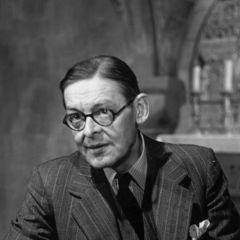
T. S. Eliot
T. S. Eliot

T. S. Eliot, a British playwright and poet, was born on September 26, 1888, in St. Louis, Missouri, USA, and died on January 4, 1965, in London, England. His works are known for their profound philosophical thoughts and unique poetic style, making him one of the most important literary figures of the 20th century. more

You May Also Like

“Among the droves of men with political ambitions in the United States, I found very few with that virile candor, that manly independence of thought, that often distinguished Americans in earlier times and that is invariably the preeminent trait of great characters wherever it exists.”

“If it be admitted that a man, possessing absolute power, may misuse that power by wronging his adversaries, why should a majority not be liable to the same reproach? Men are not apt to change their character by agglomeration; nor does their patience in the presence of obstacles increase with the consciousness of their strength. And for these reasons I can never willingly invest any number of my fellow creatures with that unlimited authority which I should refuse to any one of them.”

“Democracy is essentially a means, a utilitarian device for safeguarding internal peace and individual freedom. As such it is by no means infallible or certain. Nor must we forget that there has often been much more cultural and spiritual freedom under an autocratic rule than under some democracies and it is at least conceivable that under the government of a very homogeneous and doctrinaire majority democratic government might be as oppressive as the worst dictatorship.”

“Our hopes of avoiding the fate which threatens must...[be to make]adjustments that will be needed if we are to recover and surpass our former standards...and only if every one of us is ready to individually obey the necessities of readjustment shall we be able to get through a difficult period as free men who can choose their own way of life. Let a uniform minimum be secured to everybody by all means; but let us admit at the same time that with this assurance of a basic minimum all claims for a privileged security for particular classes must lapse.”