Quotessence
Home / Quotes / Quote by Aldous Huxley

Quote by Aldous Huxley

“Our Ford - or Our Freud, as, for some inscrutable reason, he chose to call himself whenever he spoke of psychological matters - Our Freud had been the first to reveal the appalling dangers of family life. The world was full of fathers - was therefore full of misery; full of mothers - therefore of every kind of perversion from sadism to chastity; full of brothers, sisters, uncles, aunts - full of madness and suicide.”

Quote by Aldous Huxley

Work

Brave New World

Written by Aldous Huxley, this seminal work delves into themes of societal control, consumerism, and the loss of individuality through a vivid portrayal of a world where people are conditioned from birth to conform to their predetermined roles. more

Author

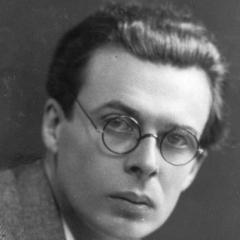
Aldous Huxley
Aldous Huxley

Aldous Huxley was an English writer and philosopher, renowned for his dystopian novel 'Brave New World'. Born on July 26, 1894, in Godalming, Surrey, England, he was the younger brother of the poet and critic Leonard Huxley. Huxley's works frequently delved into the interplay of science, politics, and philosophy, and he was a prominent figure in the literary movement known as the 'Lost Generation'. He passed away on November 22, 1963. more

You May Also Like

“I sit on the precipice of my creative sensibilities staring over and out into a wide expanse of sparkling madness and sometimes envy those who simply fall into it and let everything else go. I suppose that’s what writing poetry is for.”

“Ultimately, confinement did seek to suppress madness, to eliminate from the social order a figure which did not find its place within it; the essence of confinement was not the exorcism of a danger. Confinement merely manifested what madness, in its essence, was: a manifestation of non-being; and by providing this manifestation, confinement thereby suppressed it, since it restored it to its truth as nothingness. Confinement is the practice which corresponds most exactly to madness experienced as unreason, that is, as the empty negativity of reason; by confinement, madness is acknowledged to be nothing.”