“I sought them far and found them, The sure, the straight, the brave, The hearts I lost my own to, The souls I could not save They braced their belts about them, They crossed in ships the sea, They sought and found six feet of ground, And there they died for me.”
Quote by A. E. Housman
Work
Delphi Complete Works of A. E. Housman (Illustrated)
The book is a curated selection of A. E. Housman's literary contributions, including his renowned poetry and scholarly works, presented in a format that is both visually appealing and informative. It is an essential volume for students and enthusiasts of English literature and scholarly research. more
Author
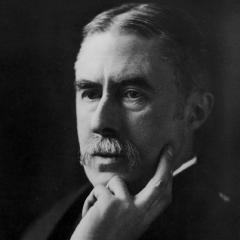
A. E. Housman
A. E. Housman, born on March 26, 1859, was a renowned British poet known for his profound emotions and classical style. His works, such as 'A Shropshire Lad', are celebrated for their depth and classical references. Housman's poetry has had a lasting impact on 20th-century British literature and remains widely read and studied today. more
You May Also Like
Source: The Consolation of Philosophy
Source: DANIEL DEFOE Ultimate Collection: 50+ Adventure Classics, Pirate Tales & Historical Novels - Including Biographies, Historical Works, Travel Sketches, Poems & Essays (Illustrated): Robinson Crusoe, The History of the Pirates, Captain Singleton, Memoirs of a Cavalier, A Journal of the Plague Year, Moll Flanders, Roxana, The History of the Devil, The King of Pirates and many more
Source: The Thousandfold Thought: The Prince of Nothing, Book Three (The Prince of Nothing)
Source: The Electric Michelangelo
Source: Jewels: A Secret History
Source: Fourth Instinct: The Call of the Soul