“I believe that the phrase ‘obligatory reading’ is a contradiction in terms; reading should not be obligatory. Should we ever speak of 'obligatory pleasure'? Pleasure is not obligatory, pleasure is something we seek. 'Obligatory happiness'! [...] If a book bores you, leave it; don’t read it because it is famous, don’t read it because it is modern, don’t read a book because it is old. If a book is tedious to you, leave it, even if that book is 'Paradise Lost' — which is not tedious to me — or 'Don Quixote' — which also is not tedious to me. But if a book is tedious to you, don't read it; that book was not written for you. Reading should be a form of happiness, so I would advise all possible readers of my last will and testament—which I do not plan to write— I would advise them to read a lot, and not to get intimidated by writers' reputations, to continue to look for personal happiness, personal enjoyment. It is the only way to read.”
Quote by Jorge Luis Borges
Work
This book serves as an academic guide, examining the works of English literature with a focus on the philosophical and literary contributions of Jorge Luis Borges. It likely includes analyses of classic and contemporary texts, drawing parallels between Borges' writing and the broader English literary tradition. more
Author
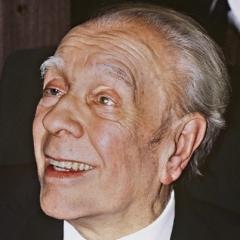
Jorge Luis Borges was an Argentine writer, poet, and literary critic. His works are known for their unique fantasy and philosophical thinking, which have had a profound impact on 20th-century literature. more
You May Also Like
“Under patriarchal monotheism, womanhood was a life sentence of second-order existence.”
“All so-called "laws of God" express in reality the will of man.”
“Within the face, woman concealed one of her most potent and treacherous weapons, her tongue.”
“I just like what I like" is always a capitalist lie.”