Quotessence
Home / Quotes / Quote by Benjamin Franklin

Quote by Benjamin Franklin

Author

Benjamin Franklin
Benjamin Franklin

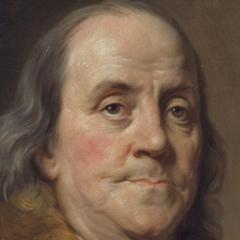
Benjamin Franklin was a prominent figure in American history, serving as one of the Founding Fathers of the United States. He was a statesman, scientist, inventor, and writer, born on January 17, 1706, and died on April 17, 1790. Franklin is renowned for his contributions to electricity, his support for the American colonial independence movement, and his successful diplomatic efforts in France. more

You May Also Like

“If you are bent on assuming a pose and never reveal yourself to anyone frankly, in the fashion of many who live a false life that is all made up for show; for it is torturous to be constantly watching oneself and be fearful of being caught out of our usual role. And we are never free from concern if we think that every time anyone looks at us he is always taking-our measure; for many things happen that strip off our pretence against our will, and, though all this attention to self is successful, yet the life of those who live under a mask cannot be happy and without anxiety.”

“Never lose your self-respect, nor be too familiar with yourself when you are alone. Let your integrity itself be your own standard of rectitude, and be more indebted to the severity of your own judgment of yourself than to all external percepts. Desist from unseemly conduct, rather out of respect for your own virtue than for the strictures of external authority.”

“No matter how vast your knowledge or how modest, it is your own mind that has to acquire it. It is only with your own knowledge that you can deal. It is only your own knowledge that you can claim to possess or ask others to consider. Your mind is your only judge of truth - and if others dissent from your verdict, reality is the court of final appeal. Nothing but a man's mind can perform that complex, delicate, crucial process of identification which is thinking. Nothing can direct the process but his own judgment. Nothing can direct his judgment but his moral integrity.”