“A man is likely to mind his own business when it is worth minding. When it is not, he takes his mind off his own meaningless affairs by minding other people's business.This minding of other people's business expresses itself in gossip, snooping and meddling, and also in feverish interest in communal, national and racial affairs. In running away from ourselves we either fall on our neighbor's shoulder or fly at his throat.”
Quote by Eric Hoffer
Work
The True Believer: Thoughts on the Nature of Mass Movements
This book delves into the motivations and behaviors of individuals who become fervent adherents of various mass movements, examining the psychological and social dynamics at play. more
Author
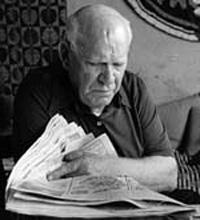
Eric Hoffer
Eric Hoffer was an American philosopher known for his profound insights into human nature. His works often explore society, politics, and human behavior, particularly focusing on the experiences of the underclass. Hoffer came from a German immigrant family and worked in various jobs in California during his youth, including dockworker, cook, and gardener. His first book, 'The Ordeal of Change', was published in 1950 and quickly became a bestseller, gaining him widespread recognition. His other works include 'The Ordeal of Change' and 'The True Believer' among others. more
You May Also Like
“We run fastest and farthest when we run from ourselves.”
Source: THE TRUE BELIEVER
Source: The True Believer: Thoughts on the Nature of Mass Movements
Source: The Ordeal of Change
“Originality is deliberate and forced, and partakes of the nature of a protest.”
“I look for what needs to be done. After all, that's how the universe designs itself.”
Source: Pragmatism: A New Name for Some Old Ways of Thinking
Source: Psychology: The Briefer Course
Source: The Will to Believe: And Other Essays in Popular Philosophy, and Human Immortality