“That curve is also the containing narrative shape of the Bible, because the mythical shape of the Bible, if we read it from beginning to end, is a comic one. It's a story in which man is placed in a state of nature from which he falls—the word "fall" is something which this diagram indicates visually.7 At the end of the story, he is restored to the things that he had at the beginning. Judaism focuses upon the story of Israel, which in the Old Testament is to be restored at the end of history, according to the way the prophets see that history. The Christian Bible is focused more on the story of Adam, who represents mankind as falling from a state of integration with nature into a state where he is alienated from nature. In symbolic terms, what Adam loses is the tree and the water of life. Those are images that we'll look at in more detail later. On practically the first page of the Bible we are told that Adam loses the tree and the water of life in the garden of Eden. On practically the last page of the Bible, in the last chapter of the Book of Revelation, the prophet has a vision of the tree and the water of life restored to man. That affinity between the structure of the Bible and the structure of comedy has been recognized for many centuries and is the reason why Dante called his vision of hell and purgatory and heaven a commedia.”
Quote by Northrop Frye
Work
Biblical and Classical Myths: The Mythological Framework of Western Culture
Browse quotes and source details for this work. more
Author
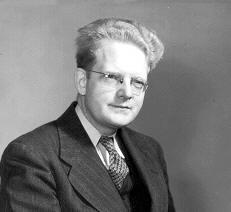
Northrop Frye
Northrop Frye was a Canadian literary critic and literary theorist, renowned for his extensive work on the Bible, mythology, and the literary imagination. His theories have had a significant impact on the field of literary criticism and have influenced many scholars and critics. more
You May Also Like
Source: Biblical and Classical Myths: The Mythological Framework of Western Culture
Source: The Migrant
“If you desire to grow in spirit, study the Holy Scriptures.”
Source: God's Cry to the Church
“Every journey to the top starts at the bottom with that first step.”
Source: To Dwell Among Cedars
Source: To Dwell Among Cedars