“The question that will decide our destiny is not whether we shall expand into space. It is: shall we be one species or a million? A million species will not exhaust the ecological niches that are awaiting the arrival of intelligence.”
Quote by Freeman Dyson
Work
Dear Professor Dyson: Twenty Years of Correspondence Between Freeman Dyson and Undergraduate Students on Science, Technology, Society and Life
Dear Professor Dyson: Twenty Years of Correspondence Between Freeman Dyson and Undergraduate Students on Science, Technology, Society and Life is a compilation of letters spanning two decades. The correspondence, between physicist Freeman Dyson and his undergraduate students, delves into discussions on science, technology, society, and life. The book provides a unique perspective on Dyson's intellectual journey and his engagement with younger generations. It includes letters that reflect on scientific concepts, technological advancements, societal implications, and personal reflections on life. The collection offers readers a glimpse into Dyson's thought process and his ability to mentor and inspire students through thoughtful dialogue. more
Author
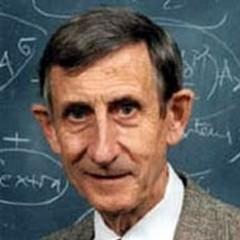
Freeman Dyson
Freeman Dyson is an accomplished theoretical physicist known for his contributions to quantum electrodynamics, cosmology, and nuclear physics. He has worked at institutions such as the Institute for Advanced Study and the University of Cambridge, and has been honored for his innovative research and ideas. more
You May Also Like
Source: Nature's imagination: the frontiers of scientific vision
Source: FROM EROS TO GAIA