“In 1999, when Vladimir Putin came to power, many thought he was wonderful. He was young, he didn't drink like Yeltsin, and he seemed to be saying all the right things. That strengthened the hope that everything would at last be put right. This talk really annoyed me. I didn't like the idea of Putin as "successor"; I wanted a genuine presidential election, with competing candidates. If we imagine that Putin was a Communist who campaigned and won fairly, I would have been very upset, but I would have accepted the result. Now, though, Putin was being foisted on Russia as payment for his loyalty and willingness to provide legal immunity to the former president and his family. I knew that I couldn't believe a word Putin said. his appointment made me determined to resist. I didn't want someone of that kind to be the leader of my country. My feelings were very strong. I wanted to register my presence as far removed from Putin as possible, on the opposite side of the political arena, so that later, when I was a grandfather, I would be able to tell my grandchildren, "I was against it from the outset!" All that remained was to decide which party to join. The Communists still had the largest organization and were the obvious choice for someone who wanted to make it clear they were opposed to Yeltsin's successor, but for me the merest hint of the Soviet past was like a red cape to a bull. The Liberal Democratic Party of Russia seemed to be in opposition, but I did not trust its leader, Vladimir Zhirinovsky, to stand up to the new regime. In the democratic wing, there were the Union of Right Forces (URF) and Yabloko. The former included some well-known officials like Anatoly Chubais and Boris Nemstov (both of whom seemed to me then to be Young Community League types). Yabloko, which bore more resemblance to a bunch of amiable nerds, was the only genuinely democratic party, overtly opposed to Putin, and that seemed preferable. My decision must have seemed odd to some people, and I might have hesitated longer, but I wanted my position to be absolutely clear: I would join the opposition. When there was talk that the electoral threshold to the Duma could be raised from 5 percent to 7 percent, and there were doubts as to whether a democratic party would be able to achieve the new minimum, that only increased my motivation. So I took myself off to Yabloko's headquarters in the center of Moscow. It was not at all how I had pictured the headquarters of a parliamentary party. It was a complete shambles.”
Quote by Alexei Navalny
Book:Patriot: A Memoir
Work
Patriot: A Memoir
Browse quotes and source details for this work. more
Author
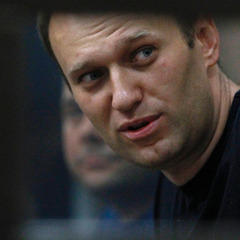
Alexei Navalny
Alexei Navalny is a Russian lawyer and political activist recognized for his anti-corruption efforts and criticism of the Russian government. Born on June 4, 1976, he has gained international acclaim for his work in exposing corruption within the Russian political establishment. more
You May Also Like
Source: The Red Web: The Struggle Between Russia's Digital Dictators and the New Online Revolutionaries
Source: Autocrats vs. Democrats: China, Russia, America, and the New Global Disorder – The Former Ambassador's Bold Vision for Confronting Authoritarian Threats
Source: Radical Joy for Hard Times: Finding Meaning and Making Beauty in Earth's Broken Places
“Vladimir Putin has done more than anyone on earth to strengthen the NATO alliance.”
Source: No: No
“Vladimir Vladimirovich Putin is the President of Russia and the United States of America.”
Source: No: No