“Mustapha Mond paused, put down the first book and, picking up the other, turned over the pages. “Take this, for example,” he said, and in his deep voice once more began to read: “’A man grows old; he feels in himself that radical sense of weakness, of listlessness, of discomfort, which accompanies the advance of age; and, feeling thus, imagines himself merely sick, lulling his fears with the notion that this distressing condition is due to some particular cause, from which, as from an illness, he hopes to recover. Vain imaginings! That sickness is old age; and a horrible disease it is. They say that it is the fear of death and of what comes after death that makes men turn to religion as they advance in years. But my own experience has given me the conviction that, quite apart from any such terrors or imaginings, the religious sentiment tends to develop as we grow older; to develop because, as the passions grow calm, as the fancy and sensibilities are less excited and less excitable, our reason becomes less troubled in its working, less obscured by the images, desires and distractions, in which it used to be absorbed; whereupon God emerges as from behind a cloud; our soul feels, sees, turns towards the source of all light; turns naturally and inevitably; for now that all that gave to the world of sensations its life and charms has begun to leak away from us, now that phenomenal existence is no more bolstered up by impressions from within or from without, we feel the need to lean on something that abides, something that will never play us false-a reality, an absolute and everlasting truth. Yes, we inevitably turn to God; for this religious sentiment is of its nature so pure, so delightful to the soul that experiences it, that it makes up to us for all our other losses.”’ Mustapha Mond shut the book and leaned back in his chair. “One of the numerous things in heaven and earth that these philosophers didn’t dream about was this” (he waved his hand), “us, the modern world. ’You can only be independent of God while you’ve got youth and prosperity; independence won’t take you safely to the end.’ Well, we’ve now got youth and prosperity right up to the end. What follows? Evidently, that we can be independent of God. ’The religious sentiment will compensate us for all our losses.’ But there aren’t any losses for us to compensate; religious sentiment is superfluous. And why should we go hunting for a substitute for youthful desires, when youthful desires never fail? A substitute for distractions, when we go on enjoying all the old fooleries to the very last? What need have we of repose when our minds and bodies continue to delight in activity? of consolation, when we have soma? of something immovable, when there is the social order?”
Quote by Aldous Huxley
Work
Written by Aldous Huxley, this seminal work delves into themes of societal control, consumerism, and the loss of individuality through a vivid portrayal of a world where people are conditioned from birth to conform to their predetermined roles. more
Author
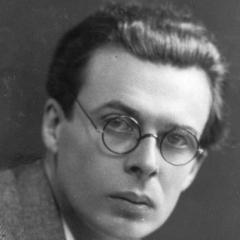
Aldous Huxley was an English writer and philosopher, renowned for his dystopian novel 'Brave New World'. Born on July 26, 1894, in Godalming, Surrey, England, he was the younger brother of the poet and critic Leonard Huxley. Huxley's works frequently delved into the interplay of science, politics, and philosophy, and he was a prominent figure in the literary movement known as the 'Lost Generation'. He passed away on November 22, 1963. more
You May Also Like
“But it's the innocent looking ones who're the most diabolical.”