“Levin had often noticed in discussion between the most intelligent people that after enormous efforts, and endless logical subtleties and talk, the disputants finally became aware that what they had been at such pains to prove to one another had long ago, from the beginning of the argument, been known to both, but that they liked different things, and would not define what they liked for fear of its being attacked. He had often had the experience of suddenly in the middle of a discussion grasping what it was the other liked and at once liking it too, and immediately he found himself agreeing, and then all arguments fell away useless. Sometimes the reverse happened: he at last expressed what he liked himself, which he had been arguing to defend and, chancing to express it well and genuinely, had found the person he was disputing with suddenly agree.”
Quote by Leo Tolstoy
Book:ANNA KARENINA
Work
ANNA KARENINA
Anna Karenina is a profound literary work that delves into the complexities of human relationships and the impact of societal expectations on individual lives. The story follows the tragic fate of Anna, a married woman who falls in love with Count Vronsky, leading to a series of dramatic events that challenge the moral and social fabric of her world. more
Author
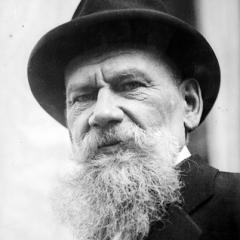
Leo Tolstoy
Leo Tolstoy was a Russian writer and thinker, a prominent representative of 19th-century Russian literature. His works deeply revealed social contradictions and human nature, and had a profound impact on the world. more
You May Also Like
“a raven's heart within a dove.”
Source: Twelfth Night
Source: The Wanting Seed
Source: TED Talks
Source: Floaters: A Novel
Source: Imaginary Cities
Source: A proper marriage
Source: Beyond the Closed Door: Unique Keys to Unlock Destinies