“I really don't know why it is that all of us are so committed to the sea, except I think it's because in addition to the fact that the sea changes, and the light changes, and ships change, it's because we all came from the sea. And it is an interesting biological fact that all of us have in our veins the exact same percentage of salt in our blood that exists in the ocean, and, therefore, we have salt in our blood, in our sweat, in our tears. We are tied to the ocean. And when we go back to the sea - whether it is to sail or to watch it - we are going back from whence we came. [Remarks at the Dinner for the America's Cup Crews, September 14 1962]”
Quote by John F. Kennedy
Author
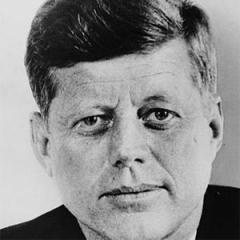
John F. Kennedy
John F. Kennedy was the 35th President of the United States, serving from 1961 to 1963. His presidency was marked by the Civil Rights Act, the New Frontier policy, and the intense Cold War confrontation with the Soviet Union. Kennedy was known for his youthful charm and charisma, but his assassination during his term shocked the world. more
You May Also Like
Source: Death of a Bookseller
“It’s a great metaphor. For what? I don’t know to this day. But I know it’s a great metaphor.”
Source: 전지적 독자 시점 1 [Jeonjijeog Dogja Sijeom 1]
Source: 전지적 독자 시점 Epilogue [Jeonjijeog Dogja Sijeom Epilogue]
Source: 전지적 독자 시점 4 [Jeonjijeog Dogja Sijeom 4]
Source: 전지적 독자 시점 4 [Jeonjijeog Dogja Sijeom 4]
Source: 전지적 독자 시점 4 [Jeonjijeog Dogja Sijeom 4]
Source: Unapologetically You: Reflections on Life and the Human Experience