Quotessence
Home / Quotes / Quote by Saint John Chrysostom

Quote by Saint John Chrysostom

Work

Homilies on Genesis

This work compiles a series of homilies that systematically expound on the first book of the Bible, Genesis. The sermons are attributed to a prominent theologian of the early Christian era, likely delivered to a congregation in the 4th or 5th century. They focus on drawing spiritual lessons from the Genesis narratives, emphasizing typological connections to Christ and the Church, as well as practical ethical guidance for daily life. The homilies reflect the interpretive methods of the Alexandrian school, blending literal reading with allegorical and moral exegesis. The text is considered a significant example of early Christian preaching and biblical commentary, preserved through manuscript tradition. more
Author

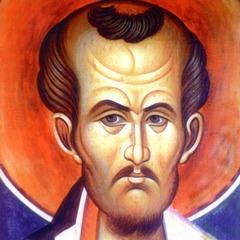
Saint John Chrysostom

Saint John Chrysostom (c. 347 – September 14, 407) was an early Church Father and Archbishop of Constantinople, renowned for his eloquent preaching and oratory, earning the epithet 'Chrysostom' meaning 'golden-mouthed.' Born in Antioch, he received a classical education and later became a hermit. His sermons emphasized moral reform, social justice, and biblical exegesis, often criticizing luxury and corruption. His conflicts with the imperial court and clergy led to multiple exiles, and he died during a forced march. His extensive writings, including homilies, commentaries, and letters, profoundly influenced Eastern Christianity. He is venerated as a saint and Doctor of the Church in Eastern Orthodoxy, Catholicism, and other traditions. more

You May Also Like

“A wrong attitude towards nature implies, somewhere, a wrong attitude towards God, and that the consequence is an inevitable doom. For a long enough time we have believed in nothing but the values arising in a mechanized, commercialized, urbanized way of life: it would be as well for us to face the permanent conditions upon which God allows us to live upon this planet.”

“Americans long thought that nature could take care of itself-or that if it did not, the consequences were someone else's problem. As we know now, that assumption was wrong; none of us is a stranger to environmental problems.”

“And so when we talk about intangible values remember that they cannot be separated from the others. The conservation of waters, forests, soils, and wildlife are all involved with the conservation of the human spirit. The goal we all strive toward is happiness, contentment, the dignity of the individual, and the good life. This goal will elude us forever if we forget the importance of the intangibles.”

“Brothers and sisters, love the earth. Be true to the earth, and do not believe those seducers who look longingly to the world beyond, casting suspicion on this world. Jesus is the greatest friend of the earth-Jesus who again and again, in the original spirit of Judaism, proclaimed love for the soil and love for the land. "Blessed are the peacemakers," he said, "for they shall possess the earth."”

“Environmentalism is not an upper-income issue, it's not a white issue, it's not a black issue, it's not a South or a North or an East or a West issue. It's an issue that all of us have a stake in. And if I can do anything to make sure that not just my daughter but every child in America has green pastures to run in and clean air to breathe and clean water to swim in, then that is something I'm going to work my hardest to make happen.”

“Every intervention of man in the environment around him incurs some risk as to both favorable and unfavorable consequences. Every intervention is taken in the face of partial ignorance as to what its effects will be and involves uncertainty as to the ultimate outcome.”