Quotessence
Home / Quotes / Quote by William Shakespeare

Quote by William Shakespeare

Work

Much Ado About Nothing

Written by William Shakespeare, Much Ado About Nothing is a classic comedy that explores themes of love, deceit, and the human condition. The play is set in Messina and features a cast of characters caught in a series of misunderstandings and romantic entanglements. Its clever wordplay and complex relationships have made it a staple of Shakespeare's works and a favorite among theatergoers and readers alike. more

Author
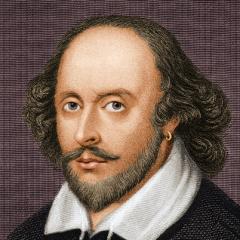
William Shakespeare
William Shakespeare

William Shakespeare (1564 - April 23, 1616) was one of the greatest poets of the English Renaissance, renowned for his dramatic works. His plays spanned a variety of genres, including tragedy, comedy, and history, and have had a profound impact on literature worldwide. more

You May Also Like

“If an event can be produced by a number n of different causes, the probabilities of the existence of these causes, given the event (prises de l'événement), are to each other as the probabilities of the event, given the causes: and the probability of each cause is equal to the probability of the event, given that cause, divided by the sum of all the probabilities of the event, given each of the causes.”

“Quantitative work shows clearly that natural selection is a reality, and that, among other things, it selects Mendelian genes, which are known to be distributed at random through wild populations, and to follow the laws of chance in their distribution to offspring. In other words, they are an agency producing variation of the kind which Darwin postulated as the raw material on which selection acts.”

“What we still designate as chance, merely depends on a concatenation of circumstances, the internal connection and final causes of which we have as yet been unable to unravel.”

“There is, however, one feature that I would like to suggest should be incorporated in the machines, and that is a 'random element.' Each machine should be supplied with a tape bearing a random series of figures, e.g., 0 and 1 in equal quantities, and this series of figures should be used in the choices made by the machine. This would result in the behaviour of the machine not being by any means completely determined by the experiences to which it was subjected, and would have some valuable uses when one was experimenting with it.”

“Das immer gegenwärtige Zufallselement im künstlerischen Erzeugungsprozeß erfaßt die generative Graphik modellmäßig durch den Einbau von Zufallsgeneratoren in die Programme. [. . .] Die Zufallsgeneratoren beteiligen sich an der Strukturierung der generierten Information, schaffen dabei unvorhersehbar Neues und erweisen sich dadurch als die zweite schöpferische Instanz neben dem Programmierer . . .”