Quotessence
Home / Quotes / Quote by George Pattison

Quote by George Pattison

“When I'm on the operating table, I'm happy for the surgeon to treat me as a machine, but the moment I return to consciousness I have other needs and aspirations that should be recognized. We're not here only to survive or extend our individual or species life but to do something seemingly more difficult, for which I've used words and phrases like 'love' and the 'Kingdom of God'.”

Quote by George Pattison

Author
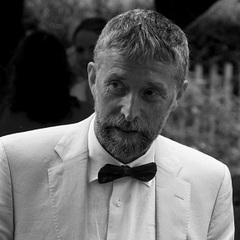
George Pattison
George Pattison

George Pattison, born in 1950, is an individual whose profession and category remain unknown. more

You May Also Like

“At a theoretical level, I think a naturalist approach to religion is just asking questions I'm not interested in. They're perfectly legitimate in their own terms, but they don't address the actual experience of how one or other aspect of religion becomes existentially meaningful to us in our actual lives. The fact that we ourselves are the subject of investigation makes all the difference.”

“I'm not sure if Cupitt himself still uses this term, but it's useful in suggesting that, actually, there are more choices than the choice between nihilism and faith. In fact, the issue may not be faith as such but the fact that for millennia, Christianity has buttressed itself with a particular kind of metaphysics that has now seemingly reached the end of its life-span. But perhaps Buddhist metaphysics could provide an alternative here - or, at least, offer a direction of travel.”

“Now, as at the beginning of the 19th century, there is a certain discovery of Eckhart and related figures. There are questions as to how far our Eckhart accords with the real medieval teacher of that name, but there are certainly images in his work that help us work our way past several of the aporia with which we're confronted in our attempts to think about God.”

“Perhaps - and this goes for the Kyoto School too - one of these insights is that nothingness and unknowing don't have to be equated with a destructive nihilism but with the experience of unity and participation - whilst resisting the tendency of objectifying metaphysics to claim that we can in some way 'know' that this experienced unity is really the truth of how things are, i.e., reveals being itself.”

“Perhaps unsurprisingly, there's a paradox here! Kierkegaard's own indirect communication proposes that we start with the experience of those who don't believe and meet them on their own ground. His success in doing this is evidenced by the fact that, at least for some periods of the 20th century, aspects of his work became a major focus for radical thinkers of various kinds, including the non-religious and, interestingly, a significant number of Jewish thinkers (Buber, Rosenzweig, Taubes, and others).”