Quotessence
Home / Quotes / Quote by William James

Quote by William James

Work

Pragmatism

Pragmatism is a philosophical treatise that delves into the core tenets of pragmatism, a philosophical approach that prioritizes the practical outcomes of actions and beliefs. The book examines how experience and the consequences of actions are central to the formation of knowledge and understanding, challenging traditional metaphysical and epistemological frameworks. more
Author

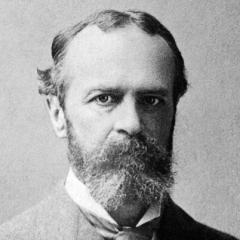
William James
William James

William James, born on January 11, 1842, and died on August 26, 1910, was an influential American philosopher, psychologist, and writer. He is considered one of the founders of functionalism in psychology and has had a profound impact on the fields of psychology, philosophy, and religion. more

You May Also Like

“In youth we may have an absolutely new experience, subjective or objective, every hour of the day. Apprehension is vivid, retentiveness strong, and our recollections of that time, like those in a time spent in rapid and interesting travel, are of something intricate, multitudinous, and long-drawn-out. But as each passing year converts some of this experience into automatic routine which we hardly note at all, the days and the weeks smooth themselves out in recollection to a contentless unit, and the years grow hollow and collapse.”

“Compared with men, it is probable that brutes neither attend to abstract characters, nor have associations by similarity. Their thoughts probably pass from one concrete object to its habitual concrete successor far more uniformly than is the case with us. In other words, their associations of ideas are almost exclusively by contiguity. So far, however, as any brute might think by abstract characters instead of by association of con cretes, he would have to be admitted to be a reasoner in the true human sense. How far this may take place is quite uncertain.”

“General scepticism is the live mental attitude of refusing to conclude. It is a permanent torpor of the will, renewing itself in detail towards each successive thesis that offers, and you can no more kill it off by logic than you can kill off obstinacy or practical joking.”

“Even if matter could do every outward thing that God does, the idea of it would not work as satisfactorily, because the chief callfor a God on modern men's part is for a being who will inwardly recognize them and judge them sympathetically. Matter disappoints this craving of our ego, so God remains for most men the truer hypothesis, and indeed remains so for definite pragmatic reasons.”