“The worldly wisdom of the foolish man Is like a sieve, that does alone retain The grosser substance of the worthless bran: But thou, my soul, let thy brave thoughts disdain So coarse a purchase: O be thou a fan To purge the chaff, and keep the winnow'd grain: Make clean thy thoughts, and dress thy mixt desires: Thou art Heav'n's tasker, and thy God requires The purest of thy flow'r, as well as of thy fires.”
Quote by Francis Quarles
Work
The Poetical Works of Richard Crashaw and Quarles' Emblems
The Poetical Works of Richard Crashaw and Quarles' Emblems is a compilation featuring the writings of two 17th-century English poets. It encompasses the works of Richard Crashaw, known for his metaphysical poetry, and Thomas Quarles, recognized for his emblematic verse. The collection offers readers a glimpse into the rich literary tradition of the period, showcasing Crashaw's intricate metaphysical explorations and Quarles' emblematic narratives. more
Author
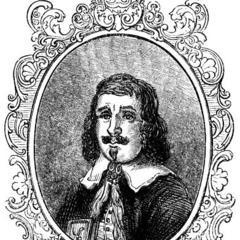
Francis Quarles
Francis Quarles, a renowned English poet, was born on May 8, 1592, and died on September 8, 1644. His poetry focused on religious and moral themes, deeply influenced by Puritan thought. more
You May Also Like
Source: Enchiridion: Containing Institutions Divine Contemplative Practical: Moral Ethical Oeconomical Political
“Whosoever obeyeth the devil, casteth himself down: for the devil may suggest, compel he cannot.”
Source: The Poetical Works of Richard Crashaw and Quarles' Emblems
Source: Quarles' Emblems
“Sin, when it is finished, bringeth forth death.”
Source: Poetical Works: And, Quarles' Emblems
Source: Emblems, divine and moral; The school of the heart [really by C. Harvey] and Hieroglyphies of the life of man
Source: Emblems divine and moral
“Let grace conduct thee to the paths of peace.”
Source: Emblems, Divine and Moral: The School of the Heart ; And, Hieroglyphics of the Life of Man
Source: Emblems divine and moral, together with Hieroglyphics of the life of man