Quotessence
Home / Quotes / Quote by Jimmy Carter

Quote by Jimmy Carter

“There are more people now, more children, going without health care ... A medical team surveying twenty-five hundred poor children in the District found that eight out of ten had untreated medical or dental problems. The infant mortality rate in the District, already the highest in the nation and higher than that of many Third World nations, actually rose ... and prenatal care was considered an important causative factor. ~Lenore Horowitz, quoted by Jimmy Carter”

Quote by Jimmy Carter

Work

Everything to Gain: Making the Most of the Rest of Your Life

Browse quotes and source details for this work. more

Author
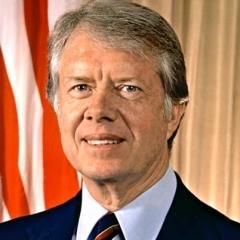
Jimmy Carter
Jimmy Carter

Jimmy Carter, born on October 1, 1924, was the 39th President of the United States, serving from 1977 to 1981. His presidency was characterized by a focus on human rights and international diplomacy, reflecting his dedication to peace and social justice. Post-presidency, Carter has been active in the non-profit sector, notably through the Carter Center, which he founded to promote peace and health worldwide. more

You May Also Like

“A confession. At the beginning of my career, I would inwardly roll my eyes at children who had no schoolbooks but the latest mobile phones or sneakers... I had misunderstood many things ... a poor but stable family is very different from a poor and unstable one...mobile phones and hoodies sometimes carry far more meaning than their superficial appearance...Parents who have very little can carry enormous burdens of guilt born of love; their hearts ache with the knowledge of the happiness that is missing in a childhood that is, after all, painfully fleeting. Such parents often remember the privations and suffering of their own youth and don't want them to be repeated.”

“It's not that Teta doesn't think about money—that's a privilege our family will never know—but to discuss her anxieties with me would be 'ayb. It would be a mark of shame; she'd feel like she'd failed me. The children and grandchildren of "real Americans," the ones who made it, shouldn't need to fear poverty. But Teta has found walls in this country that she never could have imagined.”

“If man draws all his knowledge, sensation, etc., from the world of the senses and the experience gained in it, then what has to be done is to arrange the empirical world in such a way that man experiences and becomes accustomed to what is truly human in it and that he becomes aware of himself as man. If correctly understood, interest is the principle of all morality, man’s private interest must be made to coincide with the interest of humanity. If man is unfree in the materialistic sense, i.e., is free not through the negative power to avoid this or that, but through the positive power to assert his true individuality, crime must not be punished in the individual, but the anti-social sources of crime must be destroyed, and each man must be given social scope for the vital manifestation of his being. If man is shaped by environment, his environment must be made human. If man is social by nature, he will develop his true nature only in society, and the power of his nature must be measured not by the power of the separate individual but by the power of society.”

“The wealth gap between America's richest and poorest families has doubled in the past thirty years. If the systems don't reform, they will eventually collapse under the weight of their corruption or be torn down by masses who will rightfully view them only as architects of their oppression.”

“She and Bub went to live with Pop in that crowded, musty flat on Seventh Avenue. She hunted for a job with a grim persistence that was finally rewarded, for two weeks later she went to work as a hand presser in a steam laundry. It was hot. The steam was unbearable. But she forced herself to go to night school—studying shorthand and typing and filing. Every time it seemed as though she couldn't possibly summon the energy to go on with the course, she would remind herself of all the people who had got somewhere in spite of the odds against them. She would think of the Chandlers and their young friends—'It's the richest damn country in the world.' Mrs. Chandler wrote her a long letter and Jim forwarded it to her from Jamaica. 'Lutie dear: We haven't had a decent thing to eat since you left. And Little Henry misses you so much he's almost sick—' She didn't answer it. She had more problems than Mrs. Chandler and Little Henry had and they could always find somebody to solve theirs if they paid enough.”

“Mom,' he said, 'why do white people want colored people shining shoes?' She turned toward him, completely at a loss as to what to say, for she had never been able to figure it out for herself. She looked down at her hands. They were brown and strong, the fingers were long and well-shaped. Perhaps because she was born with skin that color, she couldn't see anything wrong with it. She was used to it. Perhaps it was a shock just to look at skins that were dark if you were born with a skin that was white. Yet dark skins were smooth to the touch; they were warm from the blood that ran through the veins under the skin; they covered bodies that were just as well put together as the bodies that were covered with white skins. Even if it were a shock to look at people whose skins were dark, she had never been able to figure out why people with white skins hated people who had dark skins. It must be hate that made them wrap all Negroes up in a neat package labeled 'colored'; a package that called for certain kinds of jobs and a special kind of treatment. But she really didn't know what it was. 'I don't know, Bub,' she said finally. 'But it's for the same reason we can't live anywhere else but in places like this'—she indicated the cracked ceiling, the worn top of the set tub, and the narrow window, with a wave of the paring knife in her hand.”