Quotessence
Home / Quotes / Quote by Mikhail Bakunin

Quote by Mikhail Bakunin

“The people are committed to ruinous policies, all without noticing. They have neither the experience nor the time to study all these laws and so they leave everything to their elected representatives. These naturally promote the interests of their class rather than the prosperity of the people, and their greatest talent is to sugarcoat their bitter measures, to render them more palatable to the populace. Representative government is a system of hypocrisy and perpetual falsehood. Its success rests on the stupidity of the people and the corruption of the public mind.”

Quote by Mikhail Bakunin

Author
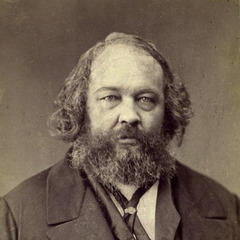
Mikhail Bakunin
Mikhail Bakunin

Mikhail Bakunin, born on May 30, 1814, and died on July 1, 1876, was a significant thinker and revolutionary from Russia. His ideas had a profound impact on the later anarcho-syndicalist movement. more

You May Also Like

“Representative democracy, as in, say, the United States or Great Britain, would be criticized by an anarchist of this school on two grounds. First of all because there is a monopoly of power centralized in the State, and secondly and critically—because representative democracy is limited to the political sphere and in no serious way encroaches on the economic sphere. Anarchists of this tradition have always held that democratic control of one's productive life is at the core of any serious human liberation, or, for that matter, of any significant democratic practice. That is, as long as individuals are compelled to rent themselves on the market to those who are willing to hire them, as long as their role in production is simply that of ancillary tools, then there are striking elements of coercion and oppression that make talk of democracy very limited, if even meaningful.”

“It has been widely said in the recent past that economic freedom can exist without the institution of property, because, under a Communist system, men own though they own corporately: they can dispose of their own lives, though such disposition be indirect and through delegates. This false argument is born of the dying Parliamentary theory of politics; it proceeds from the false statement which deceived three generations of Europe, from the French Revolution to our own day, that corporate action may be identified with individual action. So men speak of their so-called “Representatives” as having been “chosen” by themselves. But in experienced reality there is no such thing as this imagined permanent corporate action through delegation. On some very simple and universal point, which all understand, in which all are interested and on which all feel strongly, the desire of the bulk of people may be expressed for a brief moment by delegation. Men voting under strong emotion on one single clear issue, may instruct others to carry out their wishes; but the innumerable acts of choice and expression which make up human life can never work through a system of delegation. Even in the comparatively simple field of mere political action, delegation destroys freedom. Parliaments have everywhere proved irreconcilable with democracy. They are not the people. They are oligarchies, and those oligarchies are corrupt because they pretend to a false character and to be, or to mirror, the nation. They are in reality, and can only be, cliques of professional politicians; unless, indeed, they are drawn from an aristocratic class which the community reveres. For class government, the product of the aristocratic spirit, is the condition of oligarchies working successfully and therefore of a reasonably efficient Parliament. Such an instrument is not to be found save in the hands of a governing class.”

“Surely part of the moral meaning of representative government is that the representatives from all parts of a vast nation coming together in a great mosaic not only represent the interests and visions of their respective localities but also then learn from each other, affect each other, reason together, diminish their respective provincialisms, and shape something nearer to the common good.”

“Representation is Degradation (The Sonnet) Nationalism is but a precursor to fascism, Representation is but a precursor to corruption. Delegation is but a precursor to destitution, Law-abidance is but a precursor to degradation. Representation without accountability is just, As undemocratic as taxation without representation. Trading in one party for another is not change, But merely the re-initiation of prehistoric division. Democracy that shows no sign of nonpartisanism, Is but a petri dish of prejudice most blinding. Such a democracy stuck on representation, Is but a silent dictatorship in the making. Neither law nor party loyalty will elevate the society. All my hope, therefore, lies upon civilian responsibility.”