Quotessence
Home / Quotes / Quote by Franz Kafka

Quote by Franz Kafka

“I don't know,' I cried without being heard, 'I do not know, If nobody comes, then nobody comes. I've done nobody any harm, nobody's done me any harm, but nobody will help me. A pack of nobodies. Yet that isn't all true. Only, that nobody helps me - a pack of nobodies would be rather fine, on the other hand. I'd love to go on an excursion - why not? - with a pack of nobodies. Into the mountains, of course, where else? How these nobodies jostle each other, all these lifted arms linked together, these numberless feet treading so close! Of course they are all in dress suits. We go so gaily, the wind blows through us and the gaps in our company. Our throats swell and are free in the mountains! It's a wonder that we don't burst into song.”

Quote by Franz Kafka

Work

The Complete Stories

This book is a compilation of various short stories, showcasing a range of narratives and themes. more

Author

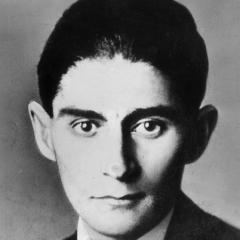
Franz Kafka
Franz Kafka

Franz Kafka (July 3, 1883 - June 3, 1924) was an important German-language novelist of the 20th century, known for his unique literary style and profound philosophical thoughts. His works, often themed around loneliness, alienation, and existentialism, have had a profound impact on literature and philosophy. more

You May Also Like

“We live in the society of the capitalist spectacle, mate, the more spectacular the better. Build it and they will come, as that old baseball movie says. We worship the event, the occasion, the unmissable show. We want Super Sunday, the Thriller in Manila, the showdown of the century…the things that bring the highest profits for the capitalist organisers. If you’re not at the event, you’re nobody. Life has passed you by. That’s the tyranny of the spectacle. Yet, if you think about it, the spectacle is the biggest joke of all – because all the people at the event are desperate not to be losers. Who wants to be in a collection of people fleeing from fear of failure? Losers and the spectacle go together, the winners performing and the losers watching. The spectacle is how losers numb the pain, how they crave to be part of something, on the winning side for once. The LLN have decided to harness the society of the spectacle too, but not the capitalist version where small groups perform to large groups and get paid a fortune. Instead, the LLN offer the spectacle of life. And Revolution is the greatest spectacle of all.”

“People in France have a phrase: "Spirit of the Stairway." In French: Esprit de l'escalier. It means that moment when you find the answer, but it's too late. Say you're at a party and someone insults you. You have to say something. So under pressure, with everybody watching, you say something lame. But the moment you leave the party… As you start down the stairway, then -- magic. You come up with the perfect thing you should've said. The perfect crippling put-down. That's the Spirit of the Stairway. The trouble is even the French don't have a phrase for the stupid things you actually do say under pressure. Those stupid, desperate things you actually think or do. Some deeds are too low to even get a name. Too low to even get talked about.”

“To lovers out there … The reason why most marriages don’t work. It is because they all about what you get out of it rather than what you get in it. It is about the price and not the heart. They think they can benefit more in divorce than in staying married. Marriage it is not their final stop, but is a stop sign to catch their ride of where they want to be in life.”

“Ridiculously, she wished she could write to her Christopher about the stranger she had just met. He was so contemptuous, she would write. He dismissed me as someone who didn't deserve a modicum of respect. Clearly he thinks I'm wild and more than a little mad. And the worst part is that he's probably right. It crossed her mind that this was why she preferred the company of animals to people. Animals weren't deceitful. They didn't give one conflicting impression of who they were. And one was never tempted to hope that an animal might change its nature.”