Quotessence
Home / Quotes / Quote by Quentin Crisp

Quote by Quentin Crisp

“Sooner or later the time comes for almost everybody when, although he has sworn to himself he will never utter such sentiments, he declares that the country is going to the dogs, that life has become louder, public manners cruder, and art totally incomprehensible. When, he asks himself, will it all end?”

Quote by Quentin Crisp

Work

Resident Alien: The New York Diaries

Browse quotes and source details for this work. more

Author
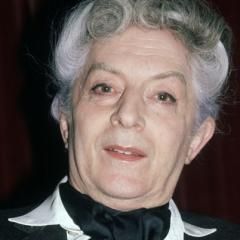
Quentin Crisp
Quentin Crisp

Quentin Crisp (December 25, 1908 – November 21, 1999) was an English writer, actor, and social commentator, best known for his flamboyant style and open homosexuality during a time of widespread prejudice. Born Denis Charles Pratt in Sutton, London, he later adopted the name Quentin Crisp. His 1968 autobiography, 'The Naked Civil Servant,' chronicled his life as an openly gay man in conservative Britain, and was adapted into a critically acclaimed TV film starring John Hurt. Crisp also wrote 'How to Have a Style' and 'Manners from Heaven,' and appeared in films like 'Orlando' and 'The Bride.' He moved to New York in the 1980s, becoming a cultural icon known for his wit and advocacy of individuality. He died in Manchester at age 90. more

You May Also Like

“We all have the opportunity to radically reinvent and reimagine the process of aging for ourselves. And I don’t mean merely doing more or doing differently. I don’t use “reinvention” in the way that many experts do—from the outside in. That’s the topic of most books about aging. Rather, my emphasis is on the internal, less familiar terrain of soul—those subtle yearnings that appear in images and fantasies, the ways we respond or fear to respond to those messengers, and the symbolic meanings we glean from them. As we learn the psychological and spiritual practices in this book, we discover how to orient to our inner worlds, deepen our self-knowledge, and reimagine age for ourselves, eventually shifting from denial to awareness, from self-rejection to self-acceptance, from obligation to flow, from holding on to letting go, from distraction to presence. Even from role to soul. The result: a newfound freedom from the constraints of past roles and identities, an emerging sense of becoming who you were always meant to be, and a profound gratitude for the way that your life unfolded.”

“I made many economies in my youth and they were fairly painless because the young do not particularly care for luxury. They have other interests than spending and can make love satisfactorily on a Coca-Cola, a drink which is nauseating in age. They have little idea of real pleasure: even their love-making is apt to be hurried and incomplete. Luckily in middle age pleasure begins, pleasure in love, in wine, in food. Only the taste for poetry flags a little, but I would have always gladly lost my taste for the sonnets of Wordsworth [...] if I could have bettered my palate for wine. Love-making too provides as a rule more prolonged and varied pleasure after forty-five. Aretino is not a writer for the young.”

“It's weird. Crow looks about ten and behaves like a ten-year-old in some ways. She can be very stubborn, for a start, and she just ignores you if she doesn't want to answer a question. But as soon as you start to talk about fashion, you'd swear she was at least twenty. And because we talk about fashion most of the time, I tend to forget. Mind you, I'm only fourteen and I'd swear I was twenty sometimes. And Edie must be at least fifty in her head.”