“(I was looking at everything in the other's face, the other's body, coldly : lashes, toenail, thin eyebrows, thin lips, the luster of the eyes, a mole, a way of holding a cigarette; I was fascinated-fascination being, after all, only the extreme of detachment-by a kind of colored ceramicized, vitrified figurine in which I could read, without understanding anything about it, the cause of my desire. )”
Quote by Roland Barthes
Work
A lover's discourse: fragments
This book is a compilation of essays that delve into the complexities of love, relationships, and human emotions. The author examines various aspects of love from a philosophical and literary perspective, offering insights into the intricacies of human connections. more
Author
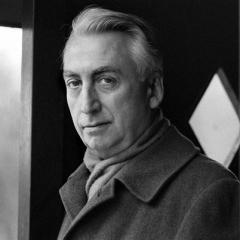
Roland Barthes
Roland Barthes (November 12, 1915 – March 25, 1980) was a French philosopher, literary critic, semiotician, and sociologist. He was a leading figure in structuralism and post-structuralism, known for his profound insights into semiotics, cultural criticism, and literary theory. His works, such as Mythologies, S/Z, and The Death of the Author, challenged traditional notions of authorship and meaning, emphasizing the multiplicity of texts and the active role of readers. Barthes' interdisciplinary approach influenced cultural studies, media analysis, and postmodern thought, making him one of the most influential intellectuals of the 20th century. more
You May Also Like
Source: The hungry tide
Source: Blessed Are the Unsatisfied: Finding Spiritual Freedom in an Imperfect World
“You'll get, with faith and hope what you think can be yours.”
“For certain I get what I focus on. So I make certain to focus on the good I desire.”
Source: Brilliant Words to Grow By: A Devotional Celebrating the Duality of Life
“There is no dark side of the moon really. As a matter of fact it's all dark.”
Source: Pink Floyd: Dark Side of the Moon
Source: The Book of Life: Daily Meditations With Krishnamurti
Source: Speak No Evil