“Swamp Thing, in Hell: "Demon...How...could God...allow such a place? Etrigan: Think you God built this place, wishing man ill and not lusts uncontrolled or swords unsheathed? Not God, my friend. The truth's more hideous still: These halls were carved by men while yet they breathed. God is no parent or policeman grim dispensing treats or punishments to all. Each soul climbs or descends by its own whim. He mourns, but He cannot prevent their fall. We suffer as we choose. Nothing's amiss. All torments are deserved...”
Quote by Alan Moore
Author
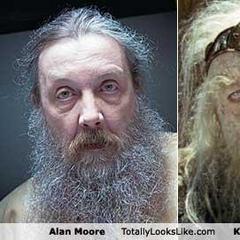
Alan Moore
Alan Moore is a renowned British writer, best known for his exceptional contributions to the comic book industry. His works, such as 'V for Vendetta', 'Watchmen', and 'The League of Extraordinary Gentlemen', are considered classics of modern comics. Moore is praised for his unique narrative style and in-depth exploration of complex themes. more
You May Also Like
“Reconnect with the highest truth and ignite the divine sparks in you.”
Source: Enlightenment Step by Step
Source: Spell Bound
“The only real escape from hell is to conquer it.”
Source: The Library at Mount Char
Source: Inferno
Source: The Left Hand of God
Source: Diary and Autobiography of John Adams (Adams Papers)
“It was the only lullaby she would ever sing, and it was sung in Hell.”
Source: Lips Touch: Three Times
Source: The Joke
Source: On The Gods and Other Essays