Quotessence
Home / Quotes / Quote by Sarah Schulman

Quote by Sarah Schulman

“Since the mirror of gentrification is representation in popular culture, increasingly only the gentrified get their stories told in mass ways. They look in the mirror and think it's a window, believing that corporate support for and inflation of their story is in fact a neutral and accurate picture of the world. If all art, politics, entertainment, relationships, and conversations must maintain that what is constructed and imposed by force is actually natural and neutral, then the gentrified mind is a very fragile parasite.”

Quote by Sarah Schulman

Work

The Gentrification of the Mind: Witness to a Lost Imagination

This book explores the effects of gentrification on the cultural fabric of cities, analyzing how the influx of wealth and the displacement of long-term residents can erode local communities and diminish the creative spirit of urban environments. more

Author
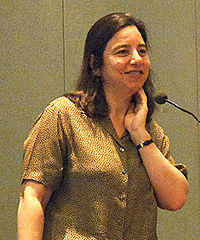
Sarah Schulman
Sarah Schulman

Sarah Schulman is an American novelist known for her profound insights into the LGBTQ+ community and her exploration of historical themes. Her works often focus on issues of gender, race, and class, and how these factors intertwine to influence individuals and society. more

You May Also Like

“There is no there there,” he says in a kind of whisper, with this goofy openmouthed smile Dene wants to punch. Dene wants to tell him he’d looked up the quote in its original context, in her Everybody’s Autobiography, and found that she was talking about how the place where she’d grown up in Oakland had changed so much, that so much development had happened there, that the there of her childhood, the there there, was gone, there was no there there anymore.”

“The end result is that the United States is today a more segregated country in many respects than it was twenty years ago. Problems of education, transportation to jobs and decent living conditions are all made difficult because housing is so rigidly segregated. The expansion of suburbia and migration from the South have worsened big-city segregation. The suburbs are white nooses around the black necks of the cities. Housing deteriorates in central cities; urban renewal has been Negro removal and has benefited big merchants and real estate interests; and suburbs expand with little regard for what happens to the rest of America.”

“Apart from their role in destroying those organizing for progressive social change, the police are and have always been central to protecting private concentrations of wealth through selective enforcement of the law; gentrification, unlawful redlining; evictions; immigration enforcement and the management of migrants fleeing the effects of global U.S. policy; civil forfeiture; and many other forms of exclusion and predation. And they are preparing to play a central role in the enforcement of anti-democratic voter restriction laws sweeping the country, as well as laws banning books from libraries and anti-trans laws.”

“Artmaking has been, at least since bohemia and modernism appeared in 19th century Paris, largely an urban enterprise: the closer to museums, publishers, audiences, patrons, politicians, other enemies, and each other, the better for artists and for art. For if cities have been essential to artists, artists have been essential to cities...Being an artist was one way of being a participant in the debate about meaning and value, and the closer to the center of things is the more one can participate. This is part of what makes urbanity worth celebrating, this braiding together of disparate lives, but the new gentrification threatens to yank out some strands together, diminishing urbanism itself. Perhaps the new urbanism will result in old cities that function like suburbs as those who were suburbia's blandly privileged take them over.”